
24
Nov 25

A sky recap

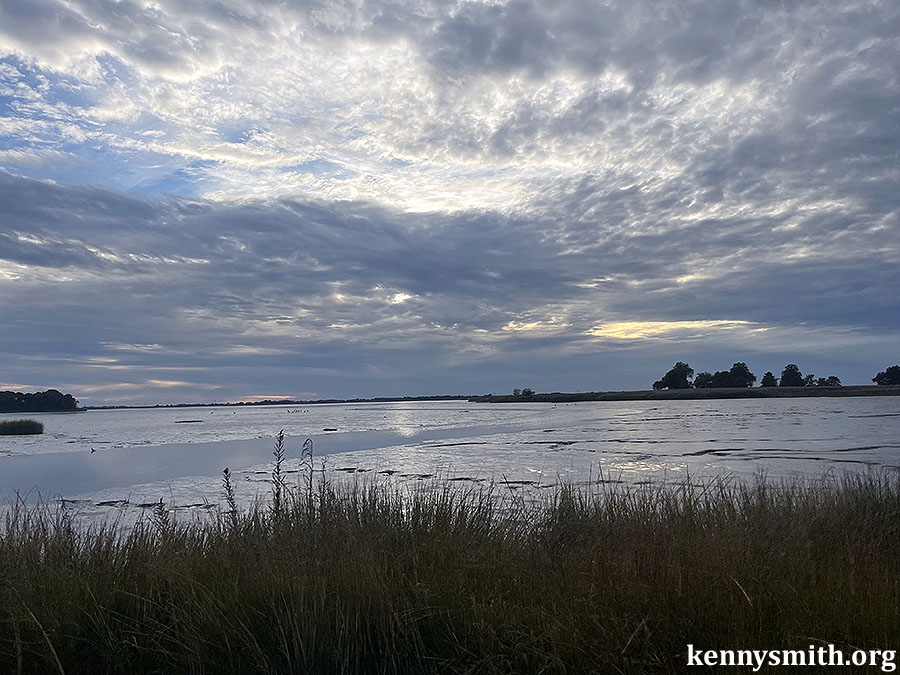
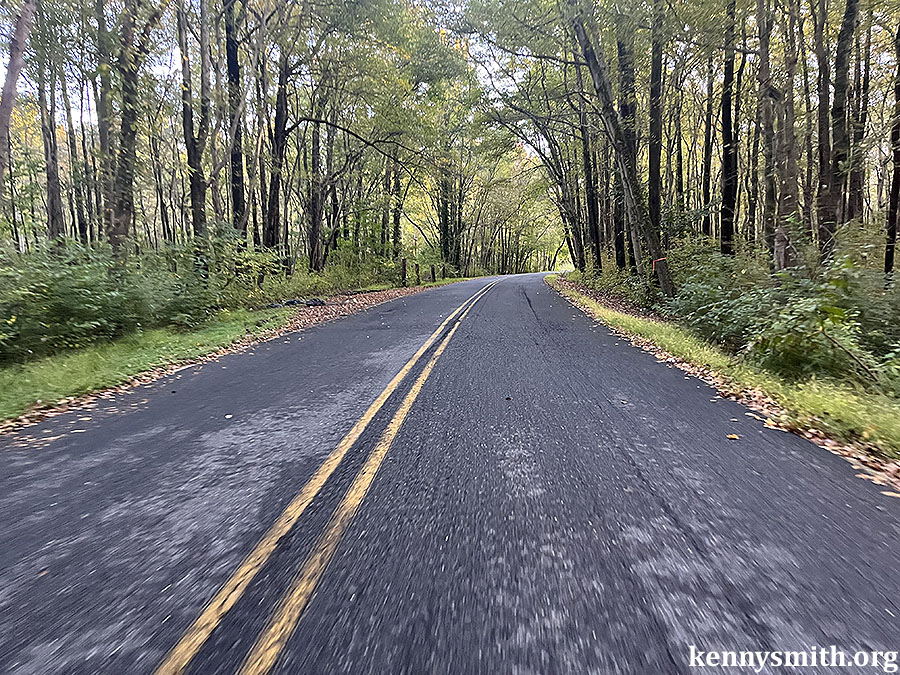
Outside on Saturday, I tried to recall how many days it has been since I’d seen the sun. I couldn’t come up with the number, which means it has been plenty. Plenty means too many. And Saturday looked like this.

This was the least cloud cover I found on Saturday.

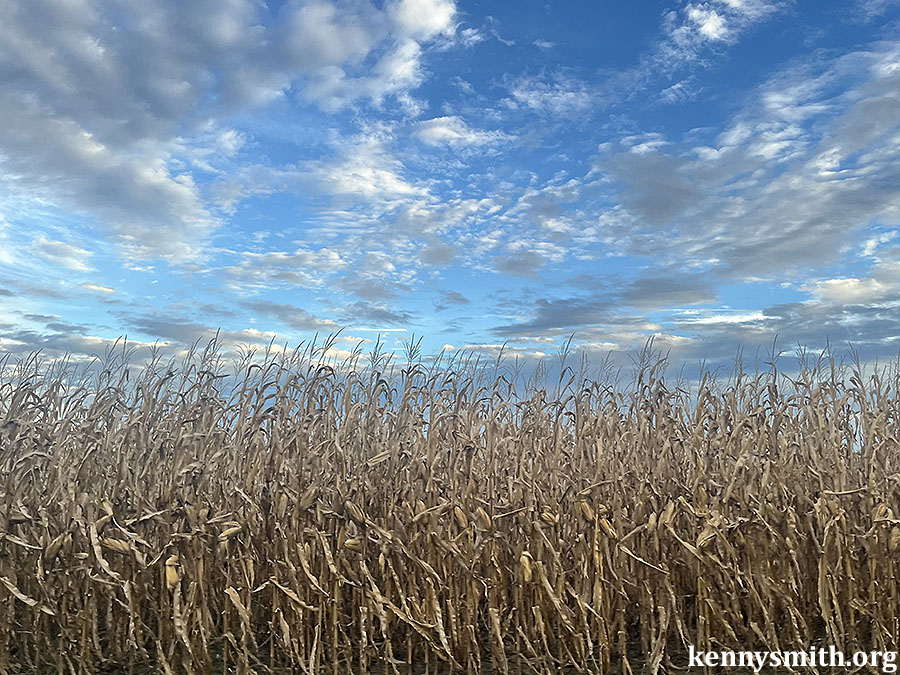
I’m over it. Seasonal, you may say, but I dispute that. We moved away, in no small part, to not have an endless schmear of gray days define our lives. Cloud cover has its uses, but I have no use for it.

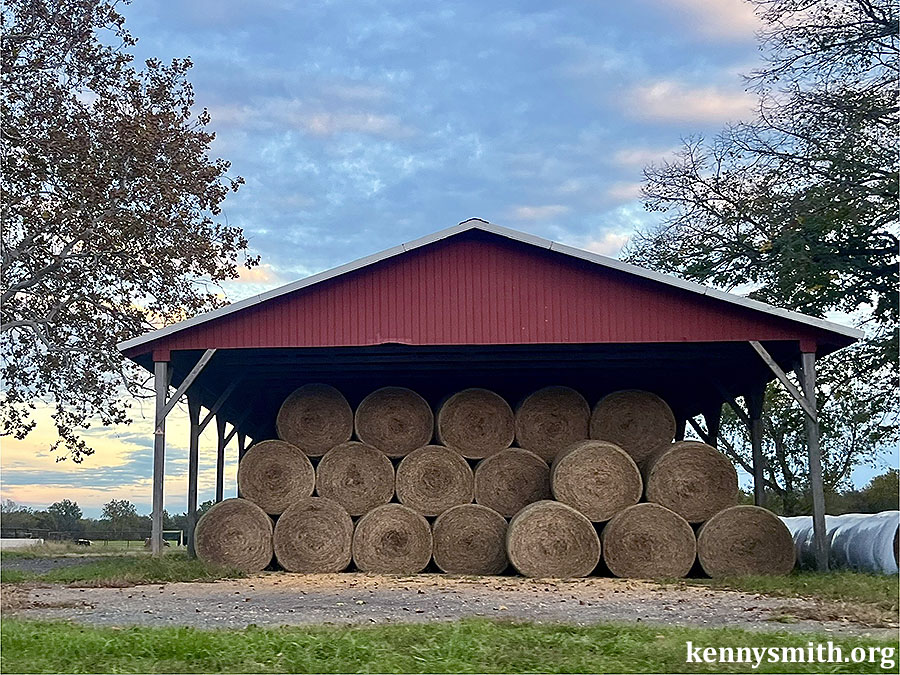
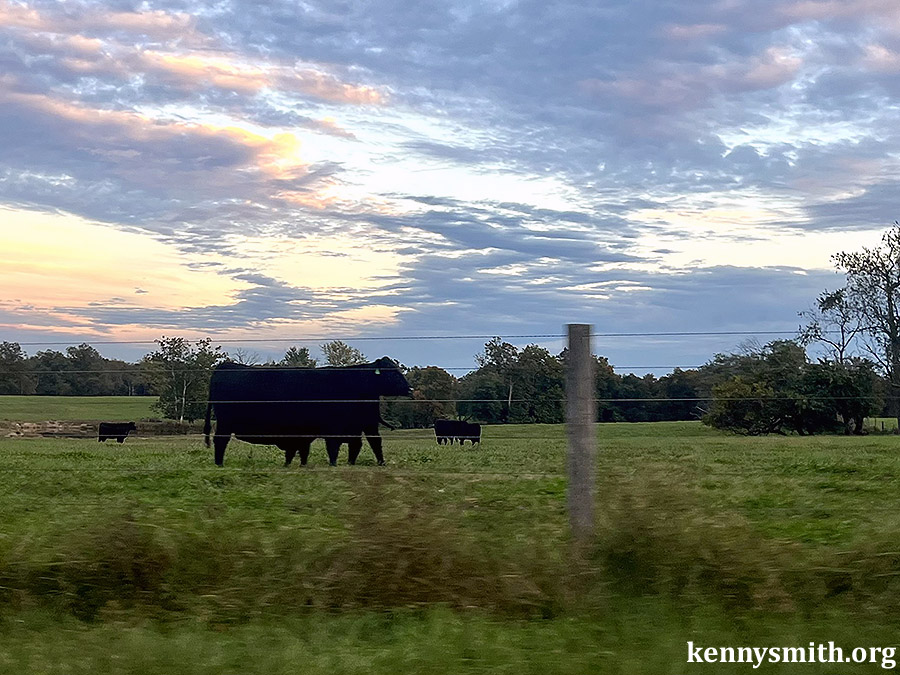
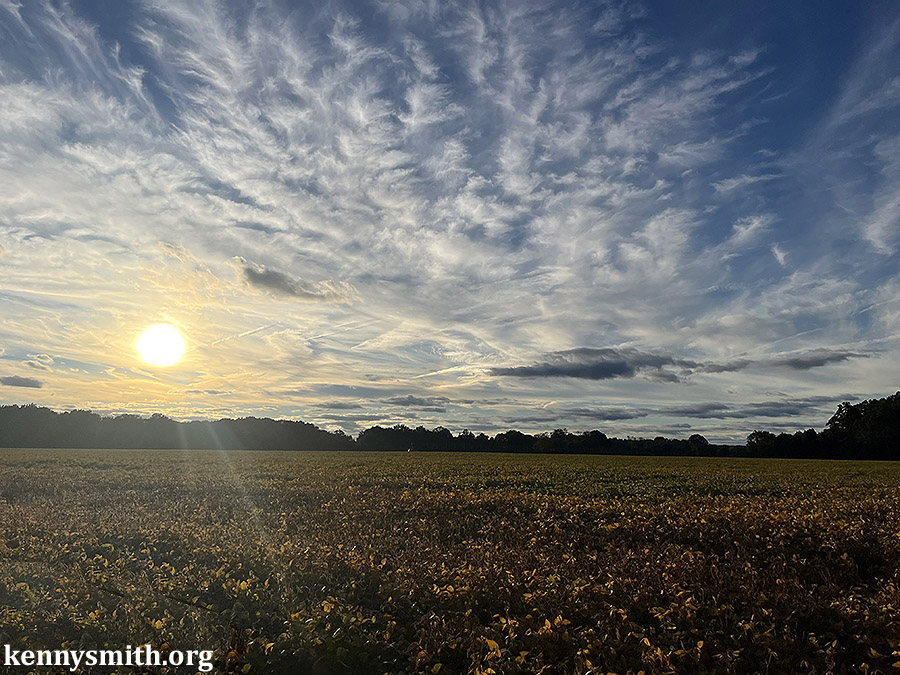
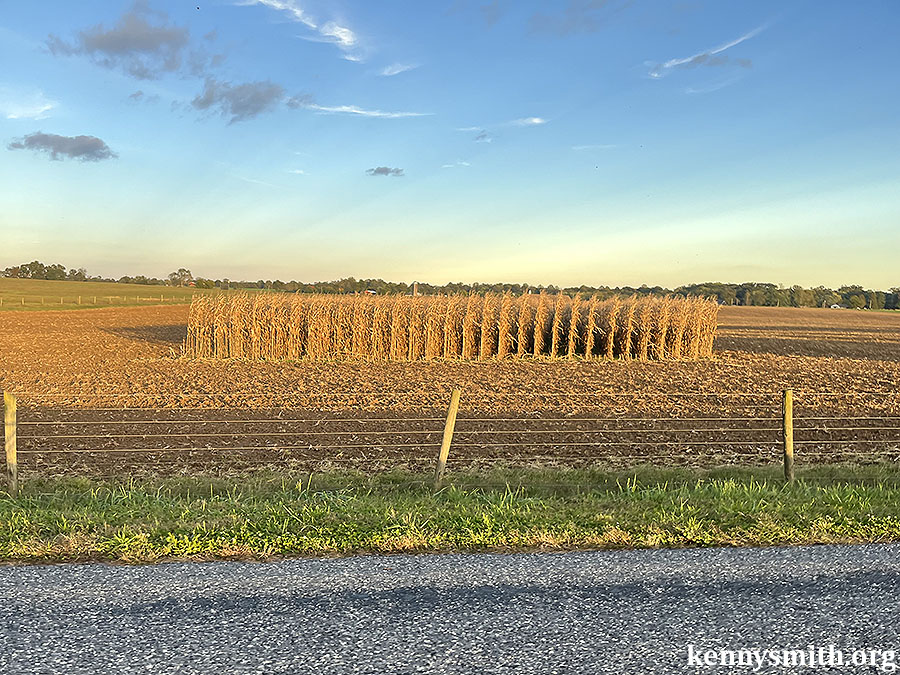
Yesterday, though these drab and boring skies were finally burned away, and we were paid in full with a fine little sunset. First, on the way from here to there.

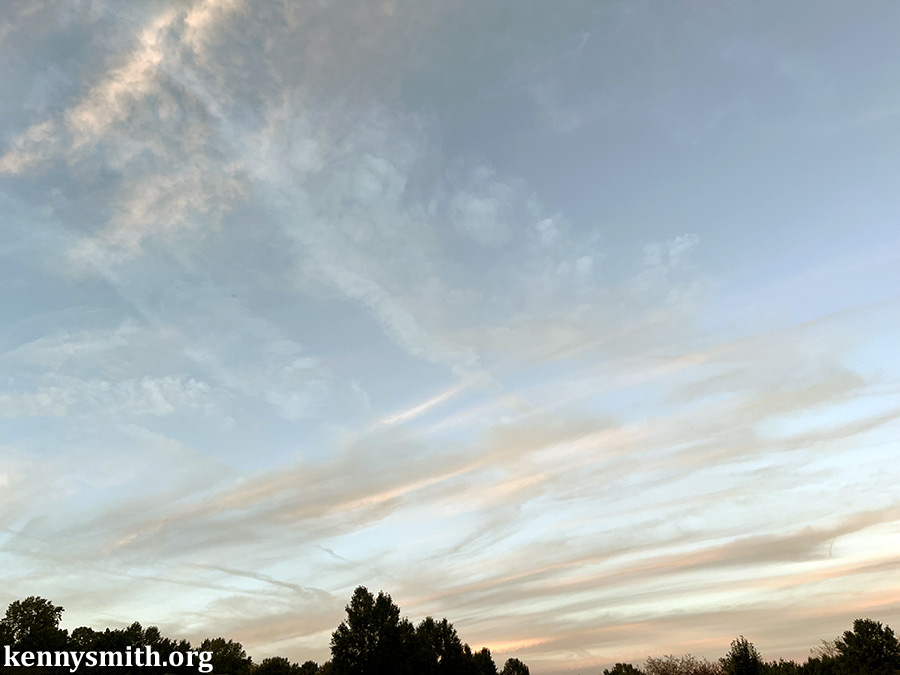
And then, right here in the neighborhood.

This evening’s sunset was pretty good. I stepped outside long enough to get a panorama. Click the image and the larger version will open in a new tab.

Today was a class prep day. We’re discussing stories tomorrow in one class and wrapping up several exciting days of discussion on diversity in another. In my online class, I spent some time sorting out the next two weeks. And also I spent some time wondering how many people will be in class tomorrow. The university’s Thanksgiving break doesn’t begin until Thursday. Students often don’t see it that way.

It’ll probably be a light week around here, too. Tomorrow, for sure, we’ll check in on the kitties. We’ll see if anything exciting comes up after that as we begin our slouch dive headlong into the holiday season.


21
Nov 25

There are many questions

We had a faculty meeting today. Many speeches and introductions. It is part of moving into, and creating, a new college. There are many questions, we don’t yet have all of the answers, but good and talented people are working on it. Answers will be found. These things don’t happen overnight.

Here’s how overnight they don’t happen. We’re in a one-year status quo pattern. As that happens many new procedures are implemented. It’s the first year of a three-year fact-finding and solution-creating process. Sometimes it seems like three years might not be a long enough for that. Sometimes you’re made aware of all that goes into it. And then you’re made aware of all of these other things too. And then there are concerns you aren’t familiar with. There’s a lot that goes into it. You can see that even if, like me, you’re only familiar with just the trees in your section of the giant forest. And people get highly specialized, of course. Also, this is not a thing that happens all of the time, these big department-college merger things. No one specializes in that. But campus communities do love making committees, and sometimes you get some great work out of them. I’m sure that’ll be the case in this instance.

This meeting was held in a building with a big auditorium, because this new college is a huge college and it needs the space for meetings such as these. Down the hall from this auditorium are the offices of the RTF department, and parts of the journalism department, which is moving in there. And on the walls are a lot of old newspaper front pages. These are always such great displays. Maybe I’m one of the only people that stops to look at them, but that’s why they’re there.

Those walls have framed prints of local and campus papers, as all journalism departments seemingly have. The farther you get from this January 1991 issue, above, the less frequently new pages appear. It occurs to me that one of the less important, but nonetheless sad, side effects of ending newsprint is that one day we’ll have no more displays such as these. The last yellowing page on the wall there is a 2018 installment of a local paper (then in the process of being assimilated by a larger entity) running their Super Bowl edition. I wonder who was in charge of deciding which ones to keep. Some are obvious, some may take a little more contextual appreciation.

You could study the look of this paper, and I have considered it. For its day, that’s a strong small paper design. The layout only feels long in the tooth to my 2025 eyes. You’re nine years into the influence of USA Today and all of the influences that emanate from there. I can’t speak to the history of that particular publication, but a quick glance at their digitized archives on newspapers.com suggests they were pretty responsive to industry and consumption trends in that era. Most importantly, it is sharing the information you need, and you know there’s more inside.

Also, there are no ridiculous SEO headlines. It was also all done locally. In 1991, the layout was made with some relatively basic software. If they were using QuarkXPress, this paper was very much an innovator. It would be five more years before a version worth talking about was released. It’s also possible that they did a lot of that with razors and glue. Old school.

Not that you came here for a lot of thoughts on old software. Not that you knew what you were getting here to end the week. I didn’t know either, to be honest. I also don’t know what we’ll have here next week. There will be something, though. We’ll need to check in on the kitties, for instance. There will be some other stuff, too. What will it be? It’s a good question. There are many questions. We’ll find out together.


20
Nov 25

This long day featured shooty hoops and a diversity lecture

In my criticism class we talked about this documentary, which begins with a basketball tournament hit by a dangerous storm. In fact, a desperation three-point shot at the end of one game sent it to overtime, which kept everyone in the Georgia Dome, while a tornado hit downtown Atlanta. Hence the title, Miracle 3. But in the second act, the tournament officials have to figure out how to continue their event because the Georgia Dome is now unusable. So they moved across town to Georgia Tech’s gym, which seems like an impressive feat of logistics.

And in the third act, Georgia, who had a thin and bad team that year, went on the most improbably run, winning three games to win the SEC tournament, another miracle 3, of a sort. But not more so that the jump shot that may well have legitimately saved lives.

It’s a pretty good documentary. The class was into it. We talked about media aesthetics and a few of the tangential points included in the documentary. Someone looked up something about the film as we talked. If nothing else, we’re fostering some good curiosity. But, hopefully, we’re doing more, as well.

In org comm we discussed diversity. We started with the SPLC’s Frame acrostic. We talked about diversity, and stereotypes, and explicit and implicit prejudice, and different sorts of discrimination, your standard greatest hits collection.

Then we tried to tease out some of the things that weren’t included in the basic overview, which allowed us to discuss sports and people with special needs. Turns out that 47 percent of kids with special needs are playing a sport, and some 30 percent of adults with a disability are physically active.

And then we talked about this story I ran across recently. A small town high school had a local elementary school student take part in some pregame football ceremonies. The kid is autistic, so they had to figure out how to accommodate her needs. They talked to some experts, and local businesses, and they set up a place where she could enjoy the game. Then this amazing thing starts happening, other people in the community start coming to the games, people who had never gone to games before. We also talked about the Philadelphia Eagles, who have a hugely robust Autism Foundation. The franchise has hired 35 employees who are on the spectrum, in a demographic that experiences 85 percent unemployment. They’ve also trained 700 stadium works to work appropriately with fans with autism, and they have sensory facilities. Some Eagles execs have personal connections to autism, and that’s how it began six or seven years ago. And, since then, the Eagles Autism Foundation has raised more than $10 million autism research and programs.

Which was a great way to end the day, teasing Tuesday’s discussion about inclusion.

I drove us home in near silence. The day had just wiped me out, somehow. And the drive seemed to take longer than usual. This evening, one set of things has been taken off my plate, annoyingly so. But there’s still much to do. So, if you’ll excuse me, I’ll get back to that.


19
Nov 25

Another extra piece

I tried to get this published elsewhere, but failed. I still like it. I’m sharing it here.

We fall in love for a lot of reasons.

I recently asked a bunch of people to tell me about a big sports event they participated in, watched in the stands, or even on TV. You could group their specific answers into a few categories, pure sport, inspiration, and family.

In no particular order …

Someone mentioned the 2021 James Madison-Oklahoma softball game. The Sooners were on their way to becoming the irresistible force in collegiate softball, and JMU played the underdog role to perfection. The two sides faced off three times in the Women’s College World Series.

College softball is perfectly packaged as a televised sport, and that series proved it. The pace is fast, the game moves quickly and the athletes are incredible.

Someone else recalled the 2017 Minnesota Vikings playoff miracle as the moment he became a football fan. Not a Vikings fan, but a football fan, because the play showed him that anything is possible.

And Joe Buck’s “DIGGS!” will give you a little pep, even when you know what’s coming.

A couple of people talked about their own personal moments, being on the field when a championship goal was scored, winning a state championship in track and field, being a part of a David vs. Goliath style upset … I asked them what it’s like to be a momentary folk hero. It must be pretty good, humility wouldn’t let them say so, but the little smiles gave them away.

Ricky Pearsall had a triumph of the human spirit last year. Robbed and shot, he was on the field for the 49ers less than two months later. It’s easy to see why someone might pick that game, especially.

Some of the memories people shared were straight up sports moments, as they should be. Giancarlo Stanton digging in with the bases loaded and delivering, just like every kid that’s ever picked up a bat has imagined, was one such sports memory.

Others were personal. One recalled going to the Yankees Old-Timers Day with his grandfather, seeing some of the greats on the field, and meeting some of the legends in the stands. And to do that with your grandfather … it’s a lifetime highlight. I hope if someone asks him that question one day, it makes the short list.

In every generation, in every Olympics, we are reminded that sport is about our future. Someone recalled watching the 2008 Beijing Games, being inspired by a 14-year-old Tom Daley and becoming a diver, too. I asked, springboard or platform? This is how young that child was when inspiration struck: My mom wouldn’t let me dive off the platform. Moms are moms, and sometimes a mom’s fear overrules the drama of athletic feats and stories well told.

While Daley towered above us, balancing on the edge of cement structures, we were also all looking up as Kawhi Leonard bounced … and bounced … and bounced a ball all over a forgiving Toronto rim. Two people mentioned this one.

Drama is why we keep coming back, no? This year’s 4 Nations Face-Off and basically the entire 2012 NHL Stanley Cup playoffs were mentioned as two great examples of peak hockey.

Some moments just live on the circumstance and the visuals they give us. Maybe that is a part of what we want fandom, at our most romantic, to give us. Like when Bryce Harper delivered “the swing of his life” against the Padres’ Robert Suárez, who saw his ball sent to left-center, and the Phillies saw their season continue into the World Series. Or perhaps Saquon Barkley doing any number of Saquon Barkley things. He comes up a lot with this question right now, as you might imagine. The greats always do when you ask a question like that. Tom Brady and his many rings, Lebron James in Miami, women’s gymnastics at the 2024 when Simone Biles and Jade Carey and Jordan Chiles and Sunisa Lee and Hezly Rivera won gold, all of them no doubt inspiring another generation of talent to follow them.

Early impressions are lasting ones. We are so often fans of teams or players because we either grew up in a broadcast radius, our folks liked them, or they were at their peak when we were coming to fall in love with the sport. It was no different for one person who told about his introduction to the Australian Grand Prix because it roared by his neighborhood a decade-and-a-half ago. There was also the guy who smiled through a memory of going to see the Pittsburgh Steelers’ training camp to meet his heroes, because Mom and Dad made it happen. Similarly, another watched Tiger Woods make his improbable run in 2019 with his grandfather. I wish the older man had been in the room, so I could have also asked him what he thought about that moment with his boy.

It is easy to see how sport can reflect us socially or culturally. We bring a lot of reasons and a history of our own to these things. We put a lot into it. Sometimes we must explain the context of a particular event to help others truly appreciate a memorable moment. It is much easier to explain how they resonate on a personal level. The great plays and best outcomes — the swing, the stick, the deep bomb, the dagger, the buzzer beater, a woman runs fast, a man dives, an incredible backhand, a preternatural putt, a fine day in the sun, a long leisurely afternoon in the autumn shade, the fabled pimento cheese sandwich, the roar of crowds, the improbable post-season runs, high-fiving strangers — really, they’re all just permission, some of the world’s most ridiculous permissions, to fall in love with these silly things.

May we carry them forever.

What’s the best sports play or event you saw live? Why does it stick with you?


18
Nov 25

Just class stuff today

In my criticism class today we discussed this story. College sports’ racial, gender hiring practices getting worse instead of improving:

College sports received a C for racial hiring practices when it decreased slightly from 75.1% in 2021 to 73.3% in 2022. College sports also received a C for gender hiring, with 74.1%, which was a slight increase from 2021 when it was 72.8%. The combined grade was a C with 73.7%. That was down from 74.0% in 2021. In other words, overall, equal opportunity hiring practices are getting worse instead of improving.

As we look at the sidelines in the tournament, we see the best record for hiring of people of color and women as head coaches. But the coaches of color represent a fraction of the student-athletes on their teams. In 2021-22, Division I men’s basketball Black student-athletes made up 52.4% of the total, compared to the 24.8% of Black head coaches. We have a smaller percentage of Black head basketball coaches now than we had 17 years ago, when 25.2% of the Division I head basketball coaches were Black.

This is a project Professor Lapchick and his team at UCF undertake every year. They grade out the big professional sports leagues in the U.S., and also collegiate sports. The students picked this little story to read, and so we talked about the grading system a bit, Lapchick’s work, and also some of the math involved here, which was hilarious. A few of those students are in my organizational communication class, and they don’t know it yet, but we’ll be discussing Lapchick on Thursday, too.

We also considered this CNN piece. This injury has plagued MLB for most of the last century, but a new phenomenon is emerging:

It is an injury which has plagued Major League Baseball for the best part of the last century. The ligament in your elbow which connects the bone in your upper arm to the one in your forearm – and is only about as strong as “a piece of celery” – tears, leaving you unable to throw and facing a very lengthy spell on the sidelines.

This season, the likes of Gerrit Cole, Corbin Burnes and Shane Bieber have all had Tommy John surgery – the most popular procedure to repair a torn UCL – while Japanese superstar Shohei Ohtani made his long-awaited return to the mound after almost 22 months away following the second elbow surgery of his career.

Dr. Christopher Ahmad, Tommy John expert and head team physician for the New York Yankees, has performed the surgery on some of the biggest names in baseball. But he has also been privy to the other side of the story.

“The alarms are going off on how devastating this problem is to the youngest players,” he says in an interview with CNN Sports.

One of the series of questions I try to get the students to answer is who is a story for, and who is the disadvantaged person, or group, in the story. Sometimes that’s subtle. Sometimes obvious. Wouldn’t you know it, at least two people in the room say they knew someone that had already damaged or ruined their UCL by high school.

I don’t know if I’ll be able to get the “piece of celery” imagery out of my mind when watching people throw a baseball.

We also discussed the Slaying the Badger documentary, which we watched last Thursday. I showed it because we watched a football-center documentary just before, and we’ll watch a basketball-themed documentary just after. There’s something to be said about watching something you nothing about. Plus, it’s a dramatic story.

I was impressed, they seemed to like it more than I would have expected. It is a trick and a challenge to try to explain a sport to an audience who may have no understanding of the sport, while also reaching an audience that knows a great deal about it, while also telling a riveting story. For the most part, the filmmakers here did that. (The book is better. Yes, the documentary was inspired by a book.)

I was proud of myself. I did not get too far into the weeds on the cycling minutiae while trying to answer their questions. That would have been easy to do.

Why was he wearing this jersey and now wearing that jersey? What’s the deal with stages?

You don’t need to know the sport to follow the story, but knowing the sport heightens your awareness of a film.

In org comm we had a great negotiation activity today. I was nervous about it, but it worked out well. I had one student play a quarterback who is about to become a free agent. I specifically chose a student who can be loud and opinionated and, often, correct, to be the player. That kept him out of the back-and-forth. I had two others play his agents. One of them a super smooth charmer, and another who is quite the thoughtful analytic type. They did their work with their client in the hall, and then they would come in and meet the team leadership for the negotiations.

The rest of the class I broke into groups representing his team. I wanted one person to be the GM, a student who also seems worldly and practical. The rest of the class broke up into various VP offices and so on. There was some designed conflict between those franchise groups, and every group had a certain series of motivations and criteria I gave them.

It took exactly one round for them all to get into the exercise. It took them five rounds of offers and counter-offers for them to reach a deal.

The most fascinating thing happened. though. Two of the team groups were supposed to be resistant to making a deal for budget and other considerations. So they had conflict with the boss group, my three-headed GM hydra. The GM(s), though, wanted to make the deal. So they had to go back and forth, which became incredibly animated. One group convinced themselves they were absolutely opposed to the signing. But when they finally reached a deal, franchise GM(s) and player-agents, everyone was so happy, and the various groups, even the ones that had been opposition just moments before, were “Welcome home!” and “Welcome to the team!”

The actual player will be a free agent soon. I’m curious to see how close, or how far off, our mock negotiation was.

I’m also wondering how we can take this org comm class and do more things like this, which are marginally practically and a lot of fun.