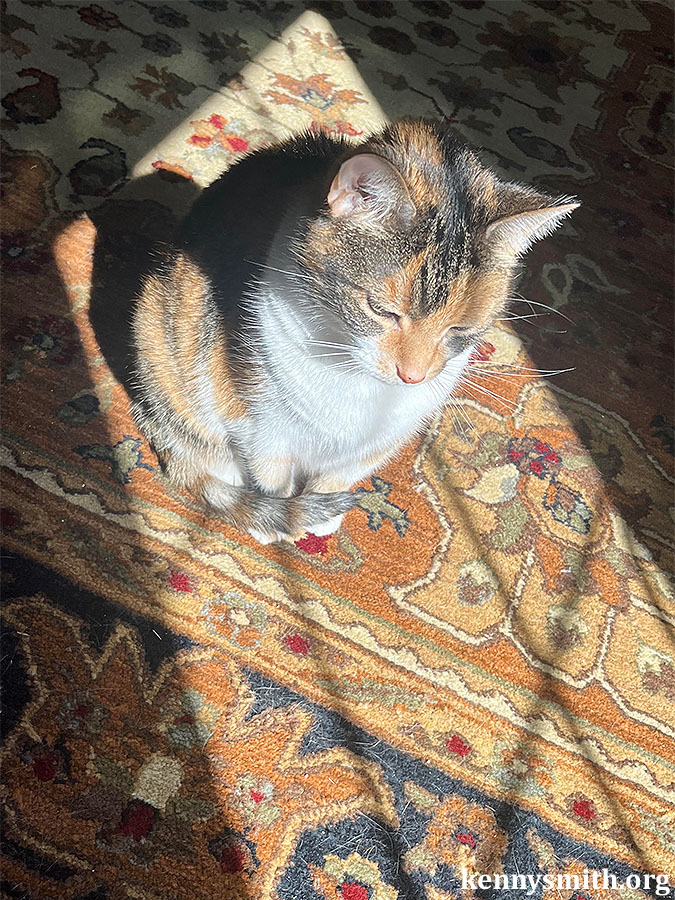
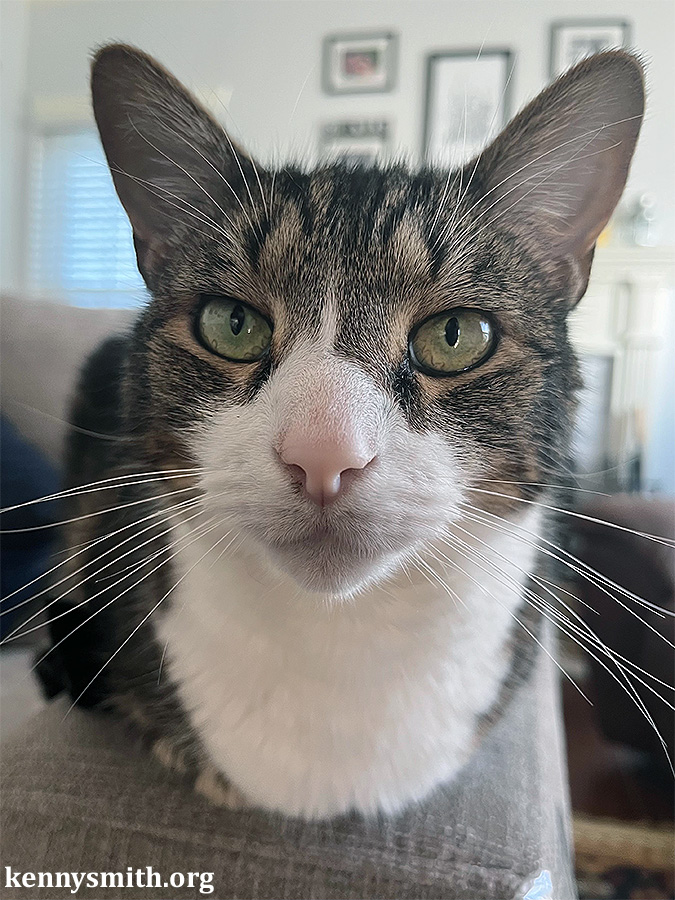
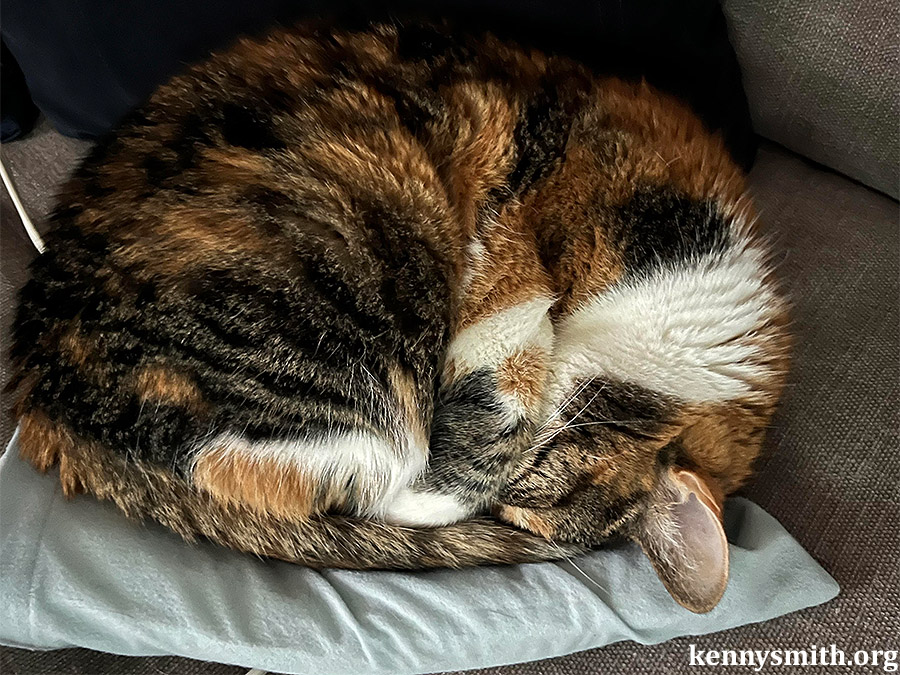
It was a weekend with a little bit of lot of things. It wasn’t busy. It wasn’t overly productive. It was peaceful and some fun was had. The weather was nice. Then it was wet. And today was nice again. I caught up on some stuff. I’m dangerously close to getting ahead on some things. Also, there was a lot of cat cuddling.
I lived the bachelor life for part of the weekend. When the cats figure that out they get especially clingy. Also, we are coming up to cuddle season, when the temperatures dip just enough that they want the extra body heat. Last night a truce was declared in the sibling war and I went to sleep with one on either side of me.

Friday I went to campus for a tour with one of the rock star biology professors. She introduced us to the oldest tree on campus, a ginko, and an oak that’s believed to be older than the nation. We walked through the oak grove.
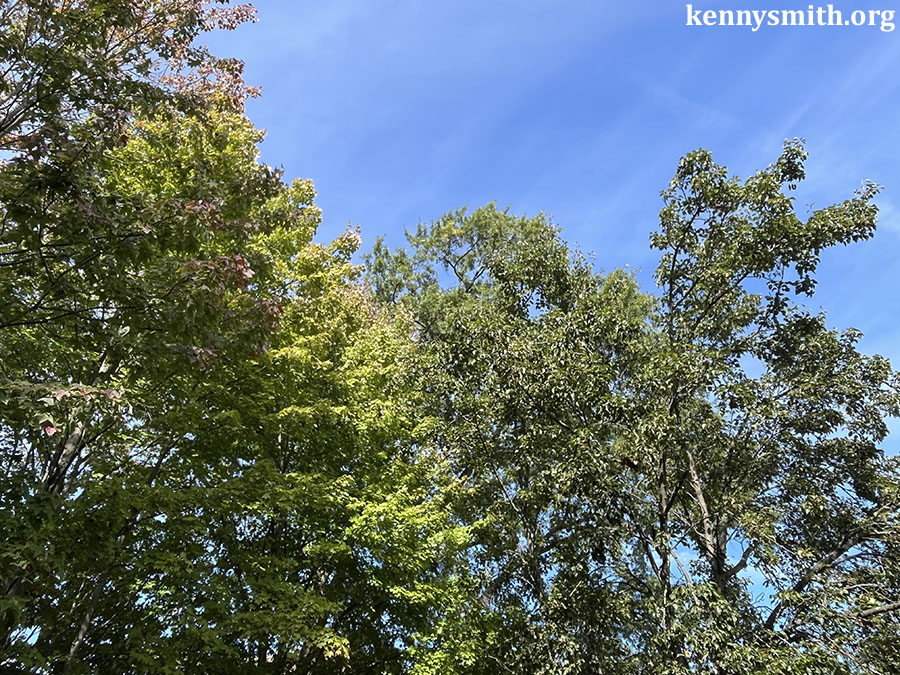
She hated on lawns. We talked about insects and other native bugs. We talked about how lawns are a traps for bugs and insects.
We saw a space that was designed to be an outdoor classroom. Almost no one uses it, apparently, but it also seemed like none of the faculty in our tour group even knew it existed. It’s only three-tenths of a mile from most of my classrooms. Maybe I should figure out a way to use the space.
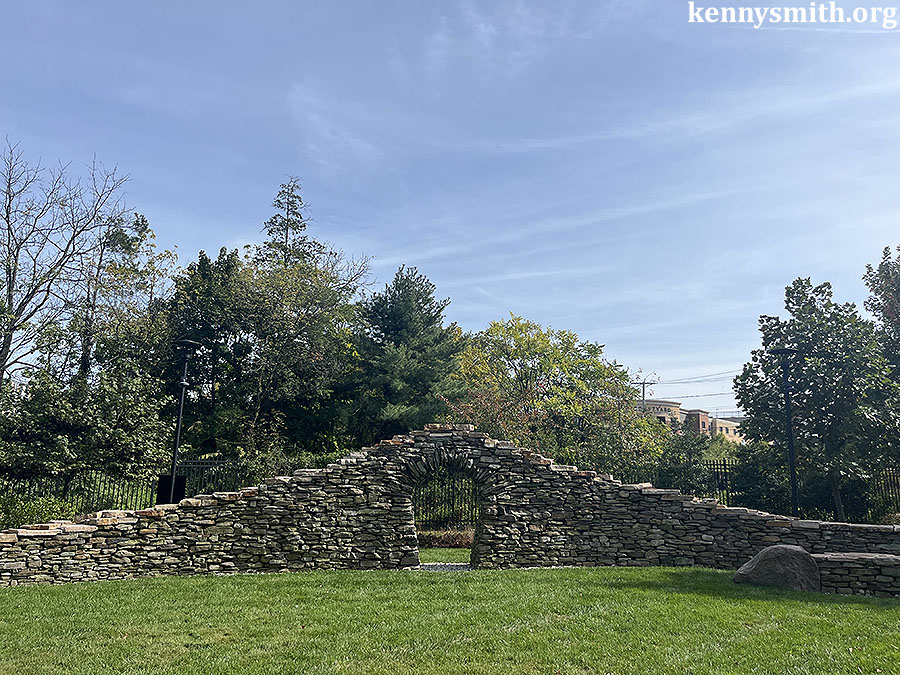
We visited what they call the arboretum, which might be the case one day, but they’re overselling it now.
We walked through a meadow that they are returning to purely native plants. We walked through it. Reader, it sounded different. The critters chirped and critted. The birds tweeted. The bees buzzed. It somehow muted the nearby road noise.
It’s a narrow strip of land, in the scheme of things, but the things that live there can help other nearby plots of land. I’d be curious about how that works, but it surely varies species-to-species. Unfortunately, there wasn’t someone with that sort of expertise on the walk. The experts that were there were great, though. And, for a change, I tried not to turn this experience into a class-generating walk.
OK, my idea for the day was a Get To Know Your Campus course. Couple of days of walking. Couple of days of history. Couple of days of different resources and activities that are available to students … stuff that helps people build up investment in the campus community. Maybe it’d be a course for transfer students.
After that tour my lovely bride and I got our flu shots. I also got a tetanus shot because I fell, and also, when was my last tetanus shot? While the woman was giving me my shots I was very brave.
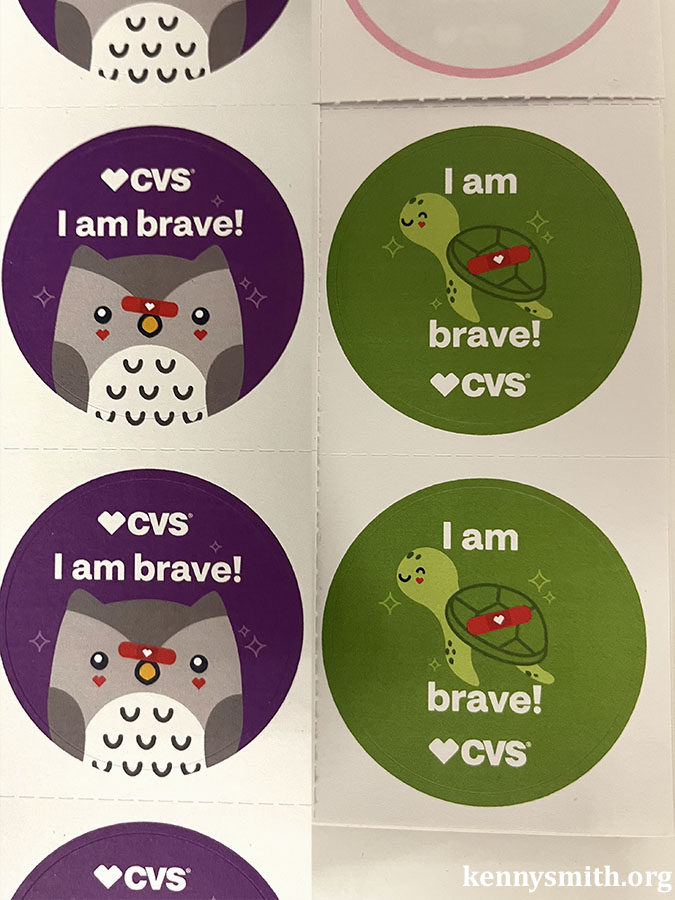
The person that stuck me, twice, offered me a sticker. I declined. We were just going home and there would be no one to propagandize. We did take her up on a lollipop, though. Because we are mature, responsible, pillars of our community, we drove home amusing ourselves by demonstrating weird, noisy ways to enjoy Dum-Dums.

I went for a ride Saturday, my first one since the Wednesday crash. The first day you’re sore. The second day you’re more sore. After that you’re just down lingering pain, or something real and lasting. You have to find out, so I went out.
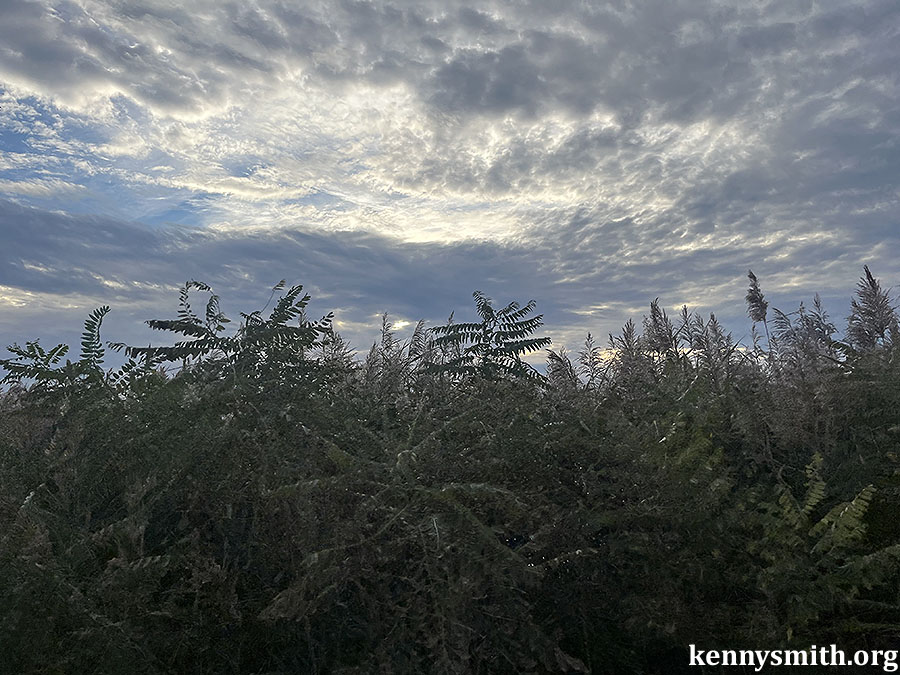
I reproduced the first ride we took here when we moved three years ago. It was a good time of day for those particular roads and I hadn’t been that way in some time. For some reason I can’t explain it isn’t my favorite route, so I just don’t give it its due. But there are plenty of lovely views.
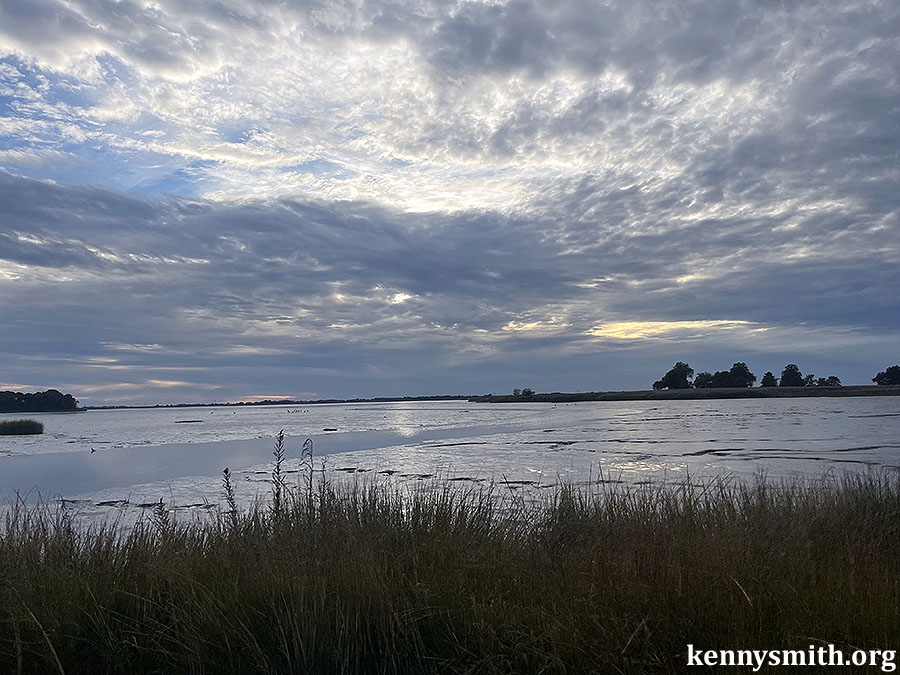
After you get over the water, get into the county seat, turn back toward home and then go over another bit of water, you get back into the farmland. Maybe that stretch is why I don’t like the route. There are some small hills which are just enough, and perfectly spaced, to break up any momentum I have.
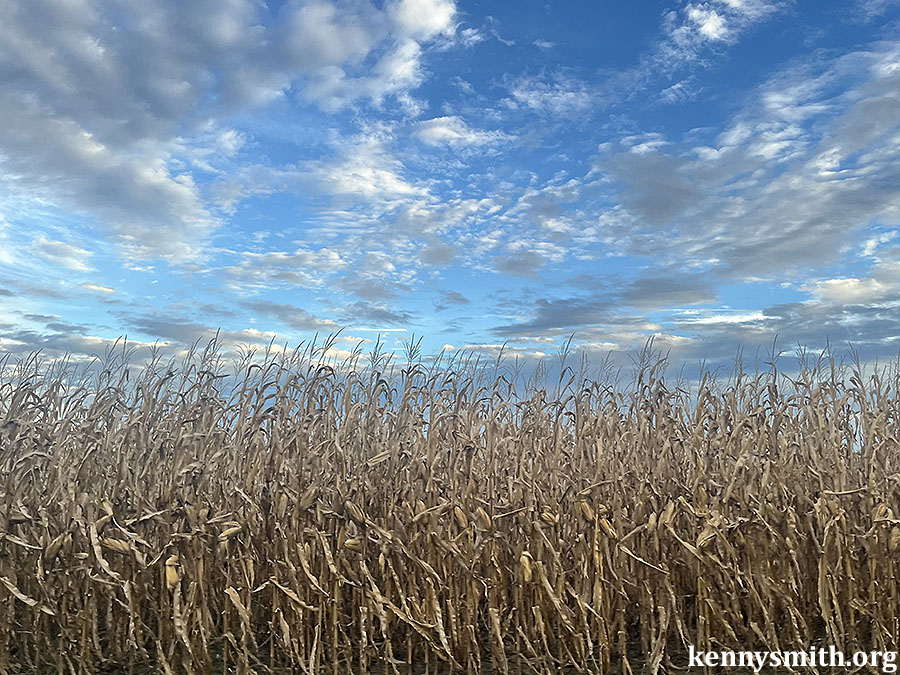
It’s a 20-mile route, which is an easy ride, but I was a bit sore, still. The first six miles my neck and shoulders hurt. But, then, my shoulder felt exactly this way for about two years after my big crash in 2012. I had to stop at a red light, though, and managed to stretch things out just after something in my neck popped. After that, the next 12 miles felt great. I wasn’t fast, but it all felt smooth.
Physically speaking, anyway.
In the last five miles, or so, though, something weird started happening.
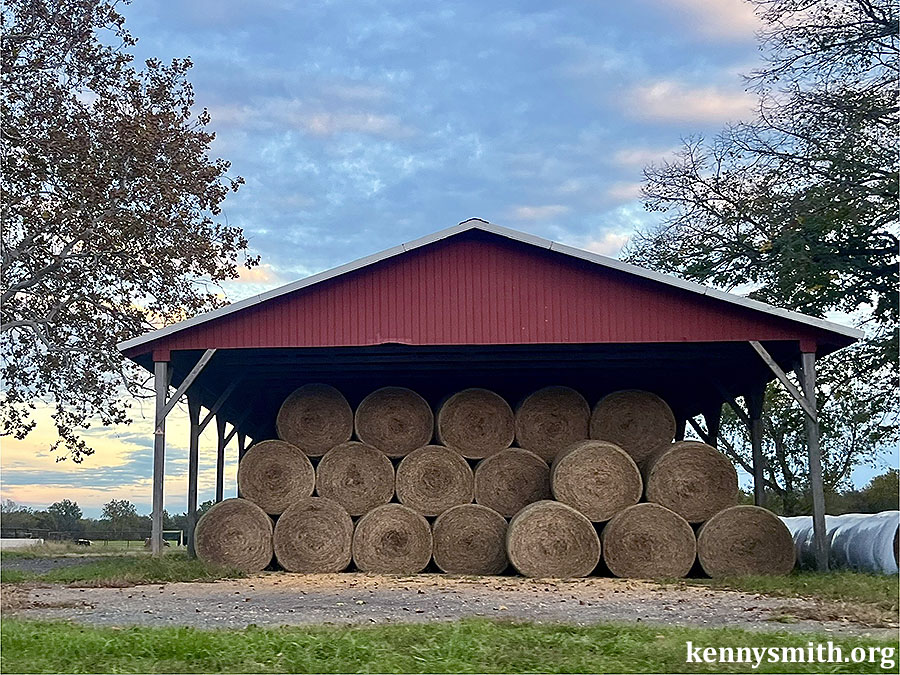
This whole route is a lot of straight lines. You turn left at a stop sign. You turn left at another stop sign. You turn left twice more with the flow of traffic. Then there’s the final left and right to get back home. Sprinkled in there are two red lights. The first one was where I had my little stretch. The second red light is four miles from home, and somewhere just before that I lost a lot of confidence in the stability of my machine. And in those last couple of turns after the light I realized I have lost all of my confidence in my limited cornering skills.
This is no way to ride.
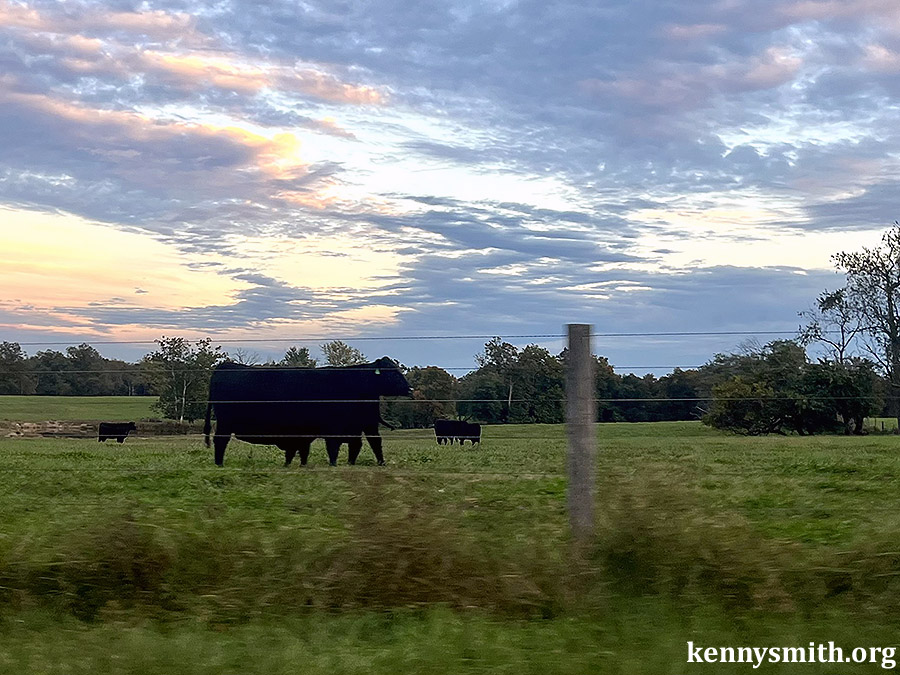
Sunday it rained all day. All day. And all night. It rained so much that I even forgot about it. The only time it wasn’t raining was when I took the garbage can down to the end of the drive. I was able to get a lot of class prep done, though. Just as importantly, I plotted out the rest of the week. Just knowing when I’m going to get this or that done feels good. It was such a great use of time that I’m thinking that, by Thursday, I might be working on next week’s class prep.
Let’s see what happens next.
What happened today, though, was that I finished some grading. I wrote my online class. I wrote much of my next message to that class. I made the final changes to Tuesday’s slide deck. I finished Thursday’s slide deck. I ignored Wednesday’s slide deck. That’s for tomorrow.
Today was a beautiful day and after I’d done the day’s work I enjoyed another little bike ride. This time, I took what was one of our other regular routes. It was a long seven-mile stretch into a headwind. My next two turns gave me more speed because of a crosswind and a tailwind. But those were two turns that felt still felt shaky.
The problem with this route is that there are two ghost bikes on one road. They sit right before my next turn, and as I was trying to line up that turn I could hear a car approaching, I could see the little dot that represented it on my Garmin, I could watch it drawing close, I could see the ghost bikes. I could see the turn. I could see the poorly patched ruts in the new road right where I wanted to turn. And, anyway, I need to find my confidence again.
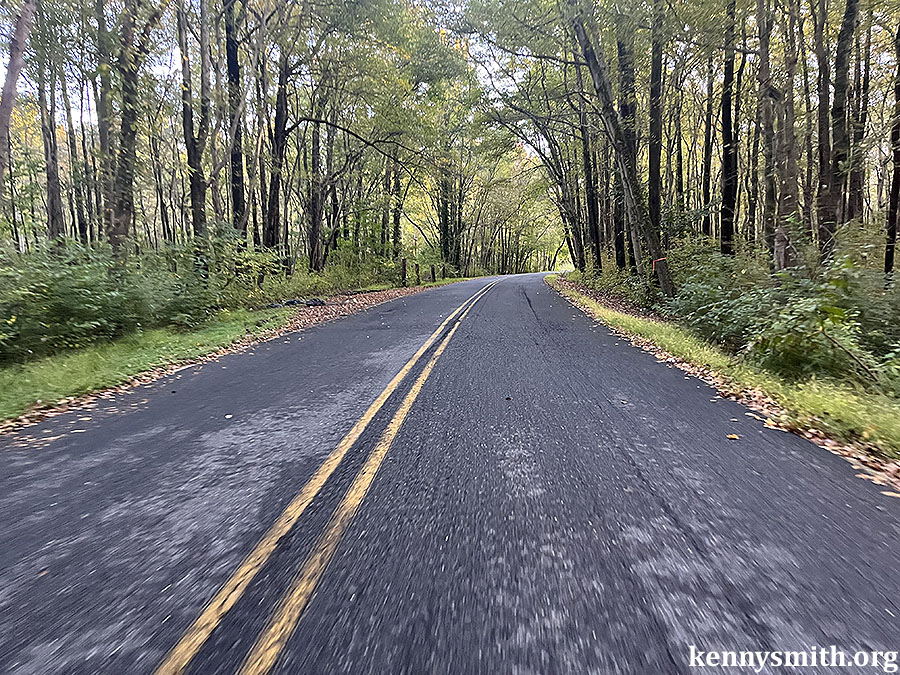
I made the turn safely, of course. Here we are, after all. And the payoff was riding under this lovely canopy of trees. This is a great road.
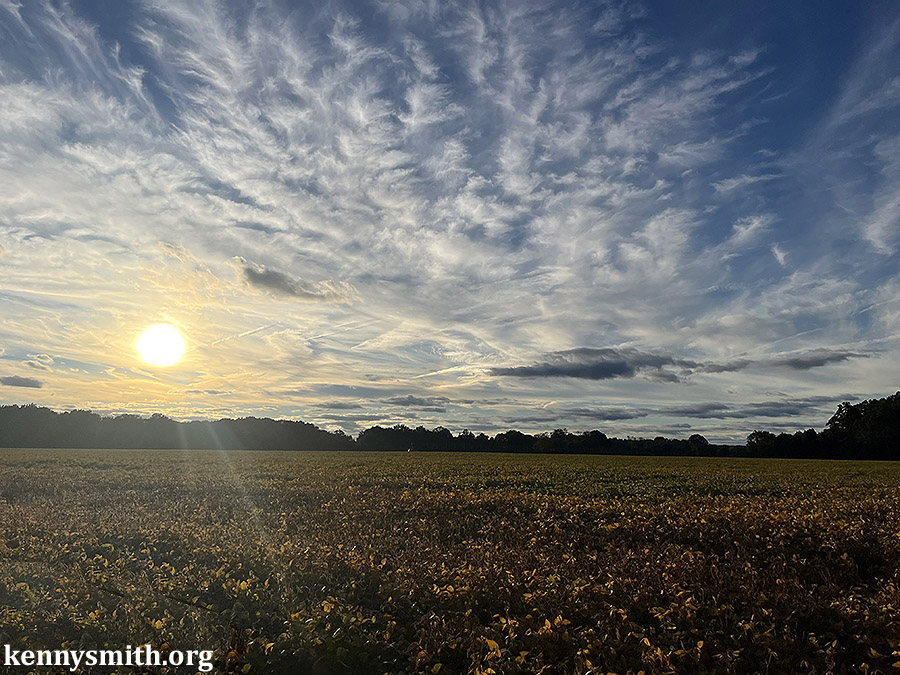
And the payoff was the sun over this field. It felt then, and looks now, like I’m pedaling through a knockoff Van Gogh painting. Just needs windmills and some of his other trademarks.
I took on some other roads I enjoy, a perfect one-mile ribbon, a long uphill stretch that I crushed, and then another up-and-down bit where the bottom is some oddly shaped pond-creek-canal thing I can’t understand that reeks of sulfur. Here I faced a conundrum. If I don’t get out of that little valley I might asphyxiate. Should I pedal faster to get up the hill and away from the smell? If I pedal faster I’ll have to breathe in more of this stuff. Also, what’s causing that? And why is it worse now than it usually is?
On the next road I ran across a cornhawk.
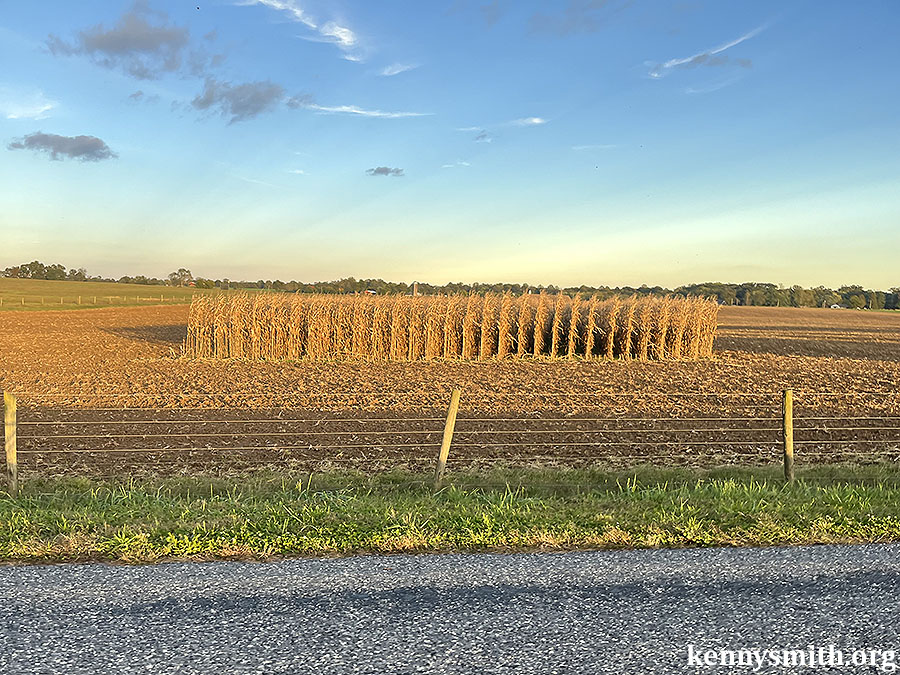
If you see it from the side, this strip of corn husks stretches almost all the way to the treeline. I wonder if it’ll still be standing when I go back by there later this week.
Anyway, on balance, my balance on the bike felt a little bit better. Still felt dreadful about each real turn, though. And some of the bumps, too! I didn’t even have a real hard crash — I still have a small bandage on my elbow, but my knee is fine, and most of the soreness has worked its way out as expected and I’m fine — but it has succeeded in getting in my head.
Oh, hey, that’s almost 1,500 words. And there’s new stuff to grade and other things to do. Let me see to those now.