06
Jun 26

Touring more of the Western Cape province

We visited a 17th century winery today. This is part of the inner-workings of the famed Fairview Winery, which began in 1693. Think on that for a while.

This, they tell us, is where the magic happens. Grape juice goes in here and sits and does some stuff and so on.

The mixing, the fermentation, the initial aging of wine. I’m not sure that I realized there were different stages to the aging of grape.

This is far more interesting, far more romantic. Those stainless steel tanks are manufactured somewhere. Probably by machines, maybe brought by aliens. But artisans made these barrels. Or, at least, they once did.

I assume there are still coopers in South Africa doing this work by hand. I follow a guy on social media who still does this in Europe. He’s almost the last of his kind there. What will we do for barrels when this craft disappears? Who will help the wine industry? Or the repurposed wine barrel industry? People buy these from wineries when they are exhausted, having given their last to years of grape juice, and they become planters, or centerpieces of homes and businesses. Oh, the stories they could tell of the grapes they have known. Good seasons, bad seasons, random people taking a photo and walking away, never pondering this process from acorn to tree to saw to cooper to Fairview.

And while this place has been at it longer than the United States has been a country. (Or South Africa, too, for that matter.) They are also known for their cheeses. They produce all of this right there on the farm. We saw some of the goats.

Some of those cheeses were outrageous.

Wine labels are the most interesting thing. It’s an art, in that some are just there, some have a style that works for the viewer or drinker (or both!) and some just look like they are trying to hard. Here, I was amused that the catalog was broad enough to allow for all different sorts of artwork. This is just festive and evocative. It is a place you’ve never been, perhaps can never go, but suddenly you want to be there.

Classic color scheme and iconography, full of memories and long days and longer nights.

The standard issue label. Just stylized black text on a cream-white sticker. But the back tells the tale. Someone thought so highly of this batch they named it after Ma.

That also means that somewhere, in those rooms with the tanks and barrels, every so often someone has to give a sample a try and decide whether the new effort is also worthy of her name.

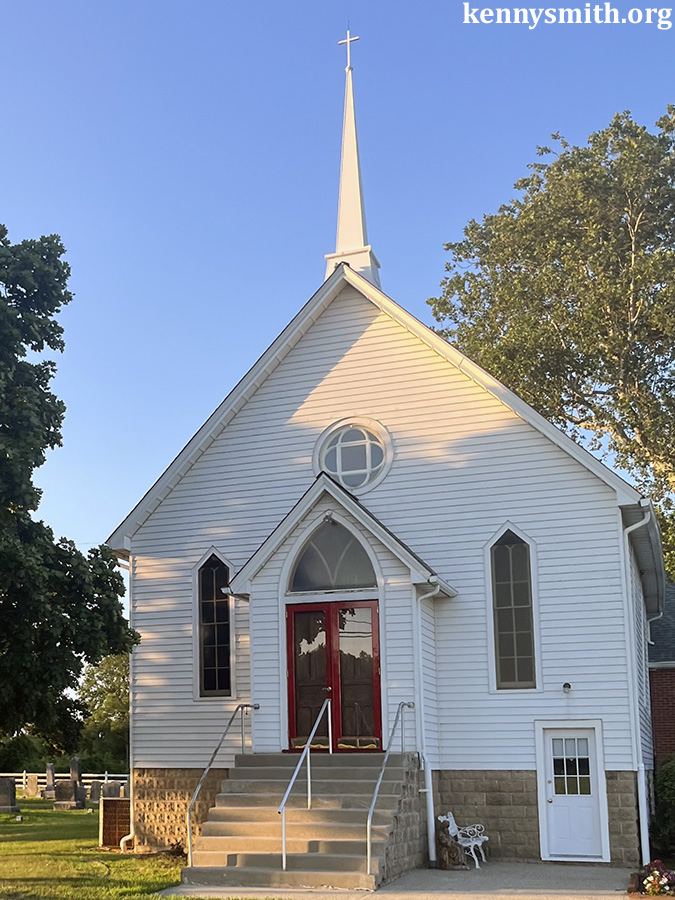
We went over to Stellenbosch, which is a college town and also a wine town. Established at the end of the 17th century, it has a population of just under 80,000 people. It’s 30 miles from Cape Town, and the glimpses we saw make it feel like a universe unto itself. Charming as can be. This is the Moederkerk (Mother Church) in Stellenbosch. It is the second oldest congregation of the Dutch Reformed Church in South Africa, and it traces its roots back to the 1680s.

Here’s an accidental photo I took of my lovely bride. Wasn’t even aware of this thumb clumsiness until I started editing these photos.

And we stopped in one store in Stellenbosch and this gentleman was telling the story of his town, his tribe, and his life. He was also offering little sips of this 15-year-old brandy. Nice fellow, I liked most of the composition here.

And if you like this sort of thing, too bad. I don’t think they’re shipping to the U.S. at the moment.

We had a lovely day. The sun was out. It was mild, but warm, but noticeably not summer. Winter has been trying to work its way into the region, and will get here soon enough, but this was a brilliant day to be outdoors, reveling in the sights and sounds, and thinking about those cheeses and wines.


05
Jun 26

ICA presentation

Today was a conference day. My lovely bride once again had research accepted at the International Communication Association’s annual conference. My job was to sit and nod sagely, and also to take some photographs. I took some photographs. Her paper was on … well … the title slide does some explaining.

She used a screengrab from a BNL video. She was very proud of the idea. It was funny. I’m not sure how many people caught the reference. To be fair to all parties, that’s pretty niche, and the crowd was also a bunch of specialty scholars. The overlap might have been just three or four people.

It was another fine paper, and a good presentation. A few years back she won a top paper award at this conference. She’s a big deal.

And the conference is, too. Global affair. Security at the doors looking at badges, for some reason. I like going to conference sessions, but I can’t imagine anyone wanting to sneak their way in. I’d sneak my way in but, again, pretty niche.

We had dinner tonight at a fancy steakhouse. It was pick-your-cut kind of fancy. But the prices were in-line with an American meal. If they said this was the best steak in town, I’d believe them. I also think every other place does a great steak, because there’s an incredibly passionate meat grilling culture here. Bo-Vine in the City is surely one of the touchstones of the commercial part of the food culture. We’d definitely go back, and certainly recommend it to others.


04
Jun 26

The African penguins

After the day’s earlier stops we made our way down to Boulders National Park to see the colony of endangered land-based colony of African penguins, one of only a few in the world. There are three beaches, three boardwalks, and this viewing area. It doesn’t seem enough, but it is a lot. We had a limited amount of time there and it seemed like not enough. As lovely as the rest of the day has been, I found I wanted less of that, and more of this.

The first full census in 1956 counted some 150,000 breeding pairs counted. Half a century later, the number was down to just 26,000 breeding pairs left in the world. This colony was established by the birds in 1983, and in over the next few decades the breeding numbers here increased, but have dipped this century because of habitat destruction from pollution, oil spills, overfishing, and global warming.

These are now the rarest species of penguin. The numbers have dipped so precipitously that we’re now in the projected window of their extinction.

These are the only penguins in Africa and Asia. They weigh up to seven pounds. pink patches above the eyes and the black mask are distinctive. The little spots on the white chest are said to be helpful for identification.

The African penguin’s coloring is called countershading, where the bird is darker on the upper side of the body and lighter on the underside. It’s about camouflage against predators and prey. They make loud braying noises.

These are pursuit divers, meaning they swim at the fish rather than dive at them. They don’t dive at them because they, of course, don’t fly. They feed primarily on fish and squid.

Experts are vying to close broader ares to fishing, meant to help with the birds breeding. South Africa decided to go another way, but lawsuits followed, and the government holds a constitutional obligation to prevent extinction of an endangered species.

Last year, the government reached a settlement established a set of larger and full-time no-fishing zones around six key breeding areas. Maybe that will help.

When they’re out looking for food, the penguins wive up to 82 feet, staying submered for more than a minute. The maximum recorded dive was 430 feet, and the longest was for over four minutes. It is not clear, to me, if those were the same dives. Or if that was an issue of the foraging. Because the fish around them have changed, fewer sardines, their diet is also changing. Now they’re eating more anchovies. Not ideal, perhaps, because of the mass and the nutrients and the subsequent downstream impact on their breeding.

These are monogamous birds, and the pairs return to this same site each year. The breeding season around here is from March to May, when a pair of eggs are laid. Both parents take turns with the incubation, which lasts for about 40 days. They’re guarded by one of them for about a month, and then they get sent to bird day care, hanging out with other chicks while ma and pa are foraging in the sea.

The average lifespan ranges between 10 to 25 years. In captivity they have lived to 34 years. They have predators on land and see. They seem to do better when they can breed in burrows or nest boxes, because they’re better shielded from land predators.

Because they don’t need a very cold enviroment, African penguins are a commonly seen species in zoos across the world, often kept in outside enclosures. They’re also pretty adaptive and tend to breed comparatively well in captivity.

The general plan seems to be to create a backup captive population, while also aiding in conservation in the wild. (So breeding improvements, more protected areas around the colonies, etc.)

And so we’ll end with this, in one three-year period during the teens, American zoos put more than a quarter of a million dollars into in-the-wild conservation.

Let’s keep that up. The little chick that this penguin is looking after could use all the help it can get.


04
Jun 26

The Cape of Good Hope

We made it down to the southwestern most point of the continent of Africa. Made it, like it was some risky venture. We were in a minivan, with air conditioning and seat belts. The driver wore a microphone to talk to everyone. We dared the dangers of the road, and thanks to our man, his hands safely on the wheel at 10 and 2, we have arrived.

We have arrived, here.

There are seals and other critters in that photo. I also took a video, but I’ll need to re-voice it, because you can’t hear the narration over the wind. Have I mentioned that it is breezy? Stiff, constant winds. Also, it is cool. Sometimes warm. It’s a wacky weather day. Glad I went shopping for an extra jacket. I wound up taking it off partway through the day. But I needed it during the other parts of the day. Anyway, that video, I’ll get to it next week probably. This is what we saw before lunch.

Just off to the right of this photo there’s another sign that helpfully suggests you’re at the southwestern point of the continent. People crowd around the sign. They all wait patiently for their photographs. Some of them are surely composed well. Statistically, some will be poor, and laughed at later. Everyone’s hair is a mess. Everyone is smiling. No one is pedantic enough to point out that there is juuuuuuust a bit more land to the south and west of the sign, so teeeeechnically … no one pointed that out. I was thinking it. (About 100 feet to the south, 250 to the west, 680 feet to the point, which makes the photographic backdrop, about 2 kilometers to the point that puts you in False Bay and about 150 linear kilometers from the actual southern tip of Africa, just outside of L’agulhas which is, itself, about 34 miles, or 54 kilometers south of the latitude of where these photos were taken. Sometimes it is good to stay quiet.) Anyway, that other braggadocios sign is just out of the range of this shot.

We took the hike.

My lovely bride went ahead of me so I could take these photos of her disappearing.

Going …

Gone …

She walks faster than me, and she hikes maybe a smidge faster, too. And by the time I got up there she’d disappea — oh, found her!

Yes, we are cute. These views are wonderful.

It’s an easy hike if you don’t mind uneven terrain. There are stairs in some places and handrails and decking where you need them. You are justly rewarded for the effort.

This is looking back to the east, away from whence we came. And you have to look back from time to time because, I mean, come on.

We’re walking toward that taller point up there. It’s one trail, our guide said. Can’t get lost, he said.

We did not get lost.

We did, however, get distracted.

And there’s some beach down there which, since this is part of a nature preserve, has been mercifully undeveloped. But you know someone is tempted. It’s a 20-minute walk down, and when you get down there you’re surrounded by 650-feet cliff faces. It’s you, the waves, the baboons, the seagulls, and the occasional surfer in the right season.

I invite you to enjoy this closer look, with this panorama I shot. Click to embiggen.

We had lunch at Two Oceans Restaurant, and you will, too, if you find yourself there. There are two gift shops and one restaurant. And while cleverly named, it is just that. The second ocean is some 90 miles away from here. The view of one ocean will have to tide you over.

We sat out on the patio because other people felt the need to sit inside for some reason. The food was good, the weather turned perfect and we were now on the leeward side of the hill.

I asked our waiter how long he’d worked there. He said four years. I asked him if he ever had a bad day or got tired of this view. He said never. Said he brings his children there sometimes. I asked him if the view was enough to make up for bad customers. He said, “Absolutely.”

Some people just have it figured out.

This is a panoramic view of our lunch spot. Click to embiggen.

And while it wasn’t the point of this part of the day, I managed to get enough other photos to fill four months of the front page of the website. You’ll see one of these views again next month. It’ll be great. This, all of this, was great.

But, first we had to hope back in our van and go to the planned highlight of the day.


04
Jun 26

Taking a road trip

This is looking like another three-post day. We covered a lot of ground on our day’s adventures, simply too much to digest all at once. So here’s the first segment.

A little shuttle bus picked us up at the hotel this morning and made a bunch of stops. They were all fine and fun and charming and some of them were quite lovely on their own. Taken as a whole, however, they seemed to be taking away from the main feature of the day. But you don’t know that until you know that. Anyway, a few of the things we saw early in the day.

Our first stop was at Bo-Kaap, in Cape Town. This is the old Malay Quarter, formerly racially segregated. It is, today, a multicultural neighborhood, noted for hits brightly colored homes and cobblestone streets, where some 57 percent of the residents are Muslim. It is being gentrified, which is changing the character of the place, but it still maintains the largest concentration of pre-1850 architecture in South Africa.

In 1760 a man started buying up the land in this area and built small homes on it that he leased to his slaves. The indigenous peoples resisted the Dutch, so they brought in Malaysians, Indonesians, and other parts of the continent, which is how it got its nickname. Into the 19th century, more housing was thrown up for a growing population of tradesmen, craftsmen, and artisans. Political exiles moved in. At sometime after emancipation, the story goes, the bright paints were put on the walls as a proud expression of freedom. (There seems to be some debate about this part of the story.)

Apartheid forced some people and communities out of the quarter, which also shrank the footprint. In the 1940s some preservation began, with 15 houses restored, and in 1966 part of Bo-Kaap was designated as a National Monument and a few dozen more houses and streets were restored.

Over-tourism is surely a problem here. We were there for about 15 minutes and you could get a sense of that.

These are the Twelve Apostles, part of the Table Mountain complex overlooking Camps Bay in Cape Town. The mountain range stretches almost four miles, but there are actually 18 peaks, averaging about about 2,460 feet. Also, right here on this bay, on this beautiful sunny day, was just about the windest wind I have ever experienced not in a storm.

I recorded a video, but you can hear nothing I said. Everyone was taking the photos of leaning into the wind in one direction and then turning around and sitting on the wind in the other direction. I found one weather site which told me we had gusts of 40 miles per hour, but that’s well under what we felt.

Anyway, this was a beautiful area, and our guide just dropped us in and out rather quickly because, despite views like this …

We were just getting warmed up. Also, we went a little inland to warm up, and get out of the wind. There’s a little shopping village there, where we spent about 20 minutes, which was just long enough for you to fantasy about the real estate ads in the windows of the realtor’s office. Looked lovely. Great bakery nearby. A coffeeshop where you can get a free cuppa if you ride up on your horse. Quite little merchants and shops. All whitewashed and quaint.

I need a swing wall now, clearly. With a custom-designed tree painting above it. Where do I go to order such a thing? Also, technically, our new custom designed swings should swing.

Anyway. We also made a quick stop to make some friends with some ostriches. Ostriches are here.

They’re also an important part of the cuisine here. We didn’t tell the ostriches that.

We also didn’t tell the precocious child who is on this tour, who is dominating, hilarious, the conversation with our guide. He could scarcely do his job for entertaining Lilly. I think her mom was pleased to have the attention go somewhere else for the part of a day.

Anyway, I have some other ostrich photos and they will wind up as banners here one day. Silly little inquisitive birds.

For the next part of our day, we’ll be exploring the Cape of Good Hope!