06
Oct 26



Oct 26
There’s a lot about time
Some habits that we have are good. Some habits that we have are bad. Some habits become routines and rituals because we do them long enough, because of expediency. Some habits need to be dismissed, because they do us no good. Checking email early in the morning is, for me, in that latter group.
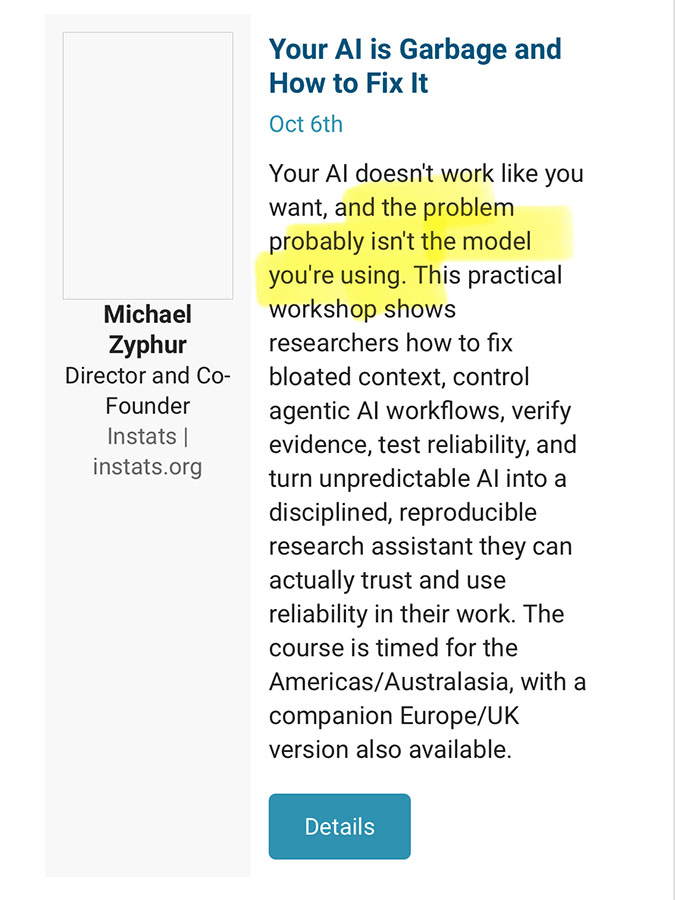
I say that because, this morning, I woke up, checked my email too early, and then bothered to read one of the unsolicited junk emails.
Look, Michael, whoever you are … mine is not the inbox you want for this. If you knew what I teach, and how I do it, or if you understood my approach to all of this … which, after technological constructivism, brings me to an internet trope. If my phone was listening to me, it wouldn’t allow things like sales pitches like this, or gambling apps, or prediction market scams, to come my way. It’s wasted effort, wasted air, wasted ads. Wasted time.
I’m never so aware of time as when I feel it is being wasted.
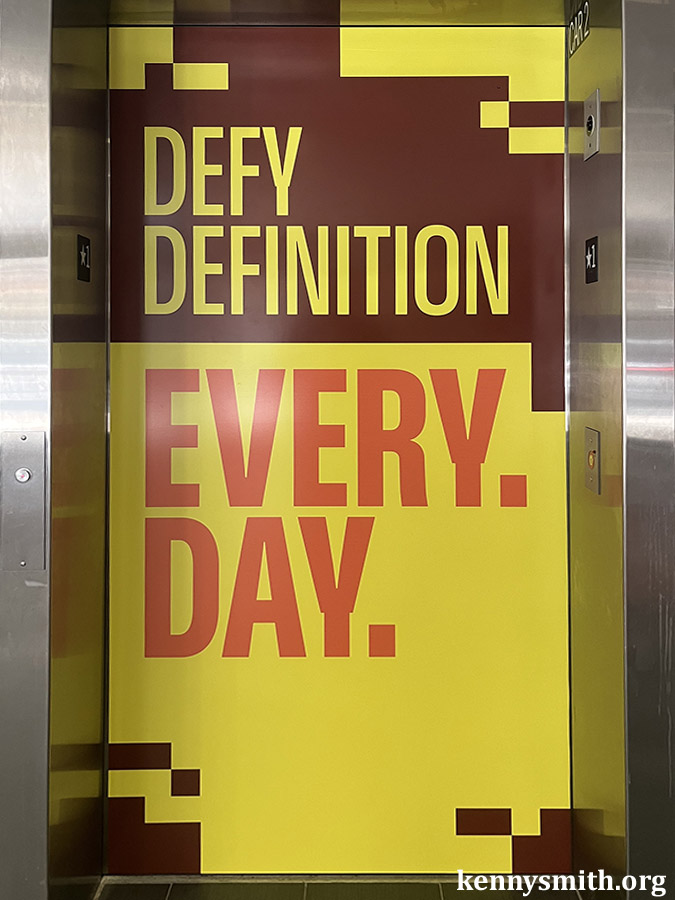
It’s not impatience, you understand. Sometimes the small lulls are necessary, or meditative, or peaceful. Some of them are too short to be of real consequence. Waiting on an elevator, for instance, is not a chore, unless you’re separated from an important meeting with a restroom by the doors that won’t open. Maybe that’s why people don’t advertise on them a lot. Maybe marketers don’t want us to associate their product with “Hurry and open up.”
This is the elevator in the building where my Tuesday-Thursday class is. It isn’t an advertisement, per se, but is a university affirmation, a new marketing slogan. Perhaps it is our call to action.
In class today we discussed a reading about Mark Zuckerberg’s testimony before Congress in 2018. The reading uses a fun little kitchen metaphor — you cutting carrots, and the fingerprints you leave on the knife.
Imagine, if you will a kitchen knife. If you were asked about the purpose of the knife, you may think “to chop some carrots” or, more indirectly, your intentions may be to eat healthfully, save money, or take time to sit down with your family. In any case, your intentions are likely to cut up food for a meal.
Now let us suppose a crime has been committed. The police, in searching your home, take fingerprints from your knife, analyze them, and even add their findings to a national fingerprint registry. If you were asked whether those were your fingerprints the answer would most likely be yes. While the fingerprints may not have been something you intended to create with the knife, you still made them. In other words, you unintentionally created some content. You have also indirectly helped to expand the fingerprint registry, perhaps assisting with the development of new information and improving analytic techniques.
The metaphor goes on: Facebook, Meta, is the knife maker, but also the knife owner, and, of course, the police. I brought that together with a few real-world stories that drove home the point.
We also talked about what’s transpired with Meta since that testimony. (Spoiler: a lot, and all of it damning.) I’m beginning to worry this class thinks my goal is to turn them off of digital media altogether. That’s not the goal, of course. Among other things, though, they need to think closely and carefully and critically about these things.
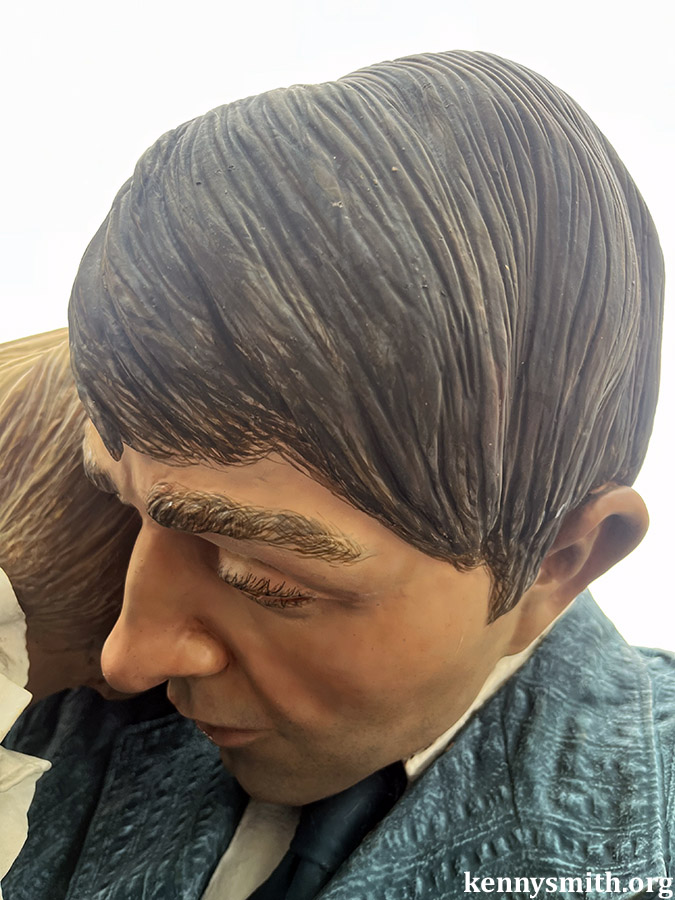
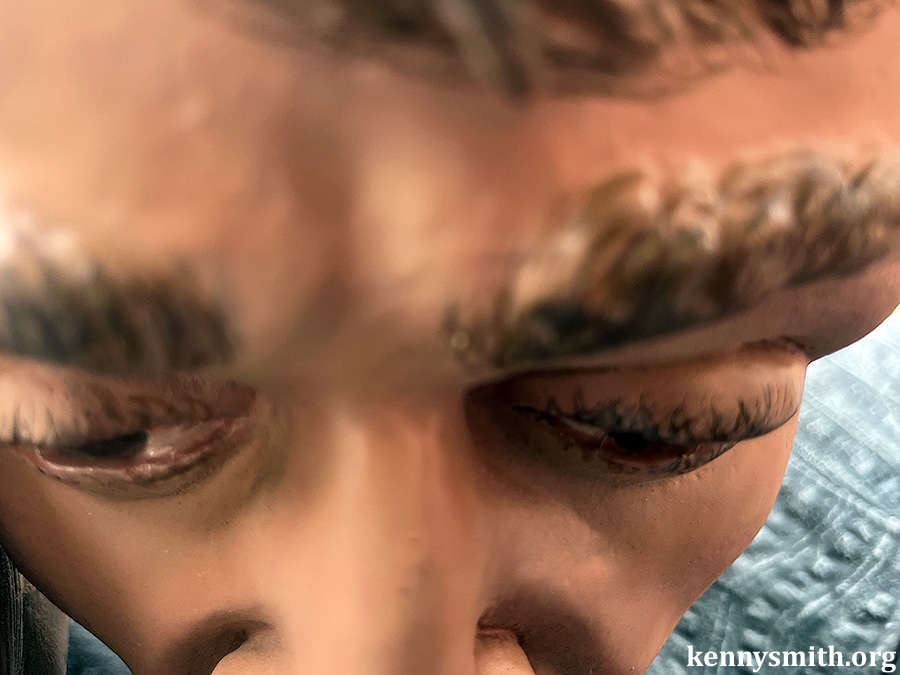
After class I walked back over to my building. Happily, it was still standing. The fire trucks were gone, and people were moving about as normal. On the way, though, I walked by the statue, Contact. I wrote about it here. Then, two week, we looked a bit more closely at the couple’s hands. Last week, I offered a closer look at some of the textures. Today, we’ll have a quick glimpse at the hugging couple’s faces.
You can’t get a good look at the man, given his positioning, but it’s all overwhelmed by this out-of-every-time hairstyle. It looks like he is peering into some far away place though, doesn’t it?
If you noticed his tangled, thorny bristle of eyelashes, I did too. As you can see from here, they are painted on, and it feels like the most hasty thing on the installation.
And the woman, well, I caught this on a great day. It had just rained; the single single tear adds something to the maudlin tone of the installation. Maybe so, anyway.
As I look at her face again, she looks like a thousand people you know. How you can do all that and rush through the eyelashes, I do not know.
Next week, we’ll take one last look at this statue. There are some other details we’ll want to see.
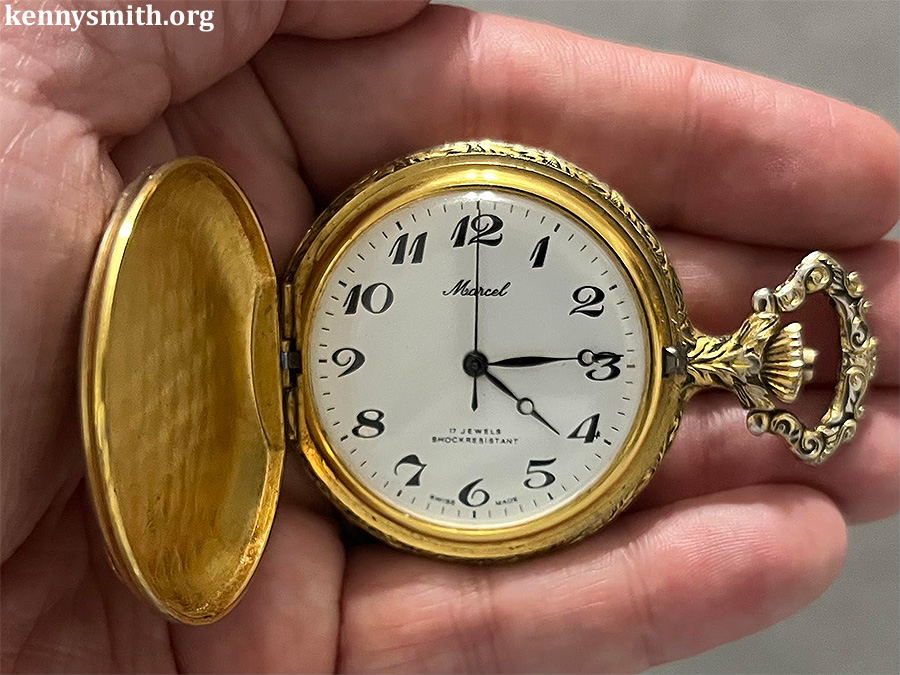
I was putting away some papers last night in the office, looking for the right folder for it, when I stumbled upon a little bag of family keepsakes. This was an out of sight, out of mind sort of thing, but as soon as my fingers touched what gave the bag its heft I knew what the bag contained, what each item inside of it was, and at least a part of the story of each of those pieces.
One of those items was my great-grandfather’s watch. My mother’s grandfather. She gave it to me a few years ago. I’d put it away, waiting to find a place that might be able to get it working. I had, in fact, looked for and found shop like that not too long ago. It’s only about 20 minutes away, but it’ll take a deliberate trip to get there. So as I pulled the watch out of the bag, and the little felt bag within it, I figured I would set the watch somewhere prominent, so it was in sight and on my mind, so I could actually get it looked at.
Then I did something unusual. I wound it. And it worked.
This isn’t a particularly old watch, and he was a humble farmer, so there’s nothing that’s fancy about it. But my great-grandfather, Henry, died in 1982 and this has sat in a box since then.
It runs a bit slow, but that can be remedied, and so now I really do want to get it looked at, tuned up and find a way to wear it properly. It’s a working family heirloom. Today, I’ve pulled it out of my pocket more times than I needed to know the time.
05
Oct 26


Oct 26
A lovely, full, productive day
This was just a little weekend of everything, meteorologically speaking. Saturday offered us some sun, and a bit of chill. Sunday was dreary and cool, the autumn really sinking its hooks all of us, the summer growing weary, the leaves on some of the trees growing bored with just hanging there. Two of the pear trees are all but bare. Saturday we rested and watched football. Sunday I spent the afternoon doing a lot of schoolwork. It seemed like a lot then, anyway. Right this second, I wonder if it was enough. It’s an unusual feeling.
It was a good day, though. Two lectures prepped to start the week. I graded some things — and more of that to go in just a bit. I reviewed four research papers for a conference. I wrote a social media post for work. I wrote my online class. It’s been a productive day.
But there’s also Friday.
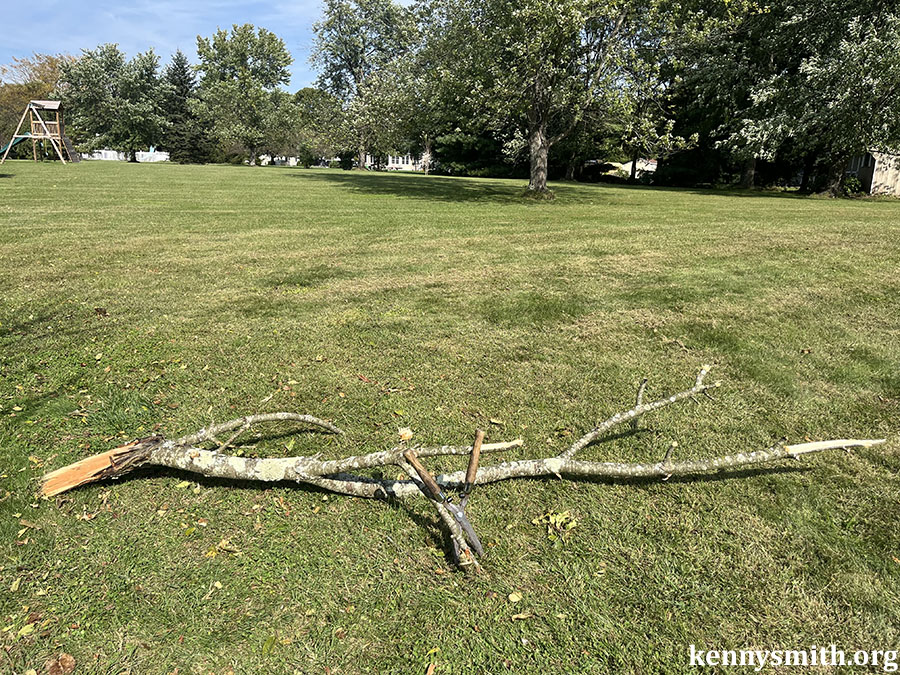
The weekend before this one, while I was out of town, we had a nor’easter. I guess I’d always associated nor’easters, large-scale extratropical cyclones, with winter weather. Maybe because they usually happen between the months of November and March. But, late September weather has to do its thing, I guess. Wind and rain were in the forecast. And here, on the inner coastal plain where the heavy land and the green sands meet, we got a little rain, but a lot of wind.
My lovely bride told me Saturday morning that we had a limb fall. I’m guessing it was the 50+ mph gusts we got overnight. I’d planned to deal with it on Monday, but I had a flight on the country’s third largest airline, who is field testing a new slogan: Never On Time.
The plan was to cut it up for the fire pit. Tuesday, after work, I dragged the whole limb to the back. I’ve done this a few times now, cutting up limbs at the front of the property and then taking several trips back to the wood pile, when I’m already tired and out of patience. This time, because I finally got smart, I dragged the whole limb to the backyard and just one time. This was the right strategy.
Friday I cut it up. I realized I’d forgotten the hedge trimmer and left it outside for a week or more, so I cleaned up the rust with a proprietary mixture of rust removal products that have been maturing for years under the kitchen sink. Then I set about cutting back all the twigs and small branches and leafy bits, which has made the pile of stuff to burn in the pit impossibly tall. (The next time we get a night with no wind, we’re roasting marshmallows.) The limb, once denuded, didn’t look like all that much.
So the next question was which way should I deal with that. I could break out the chainsaw. I’d have to oil it up, run some extension cords, remember how to use the thing, and so on. That limb doesn’t hardly seem substantial enough for that. I’ve also got a great pruning saw. I finally decided the pruning saw would be better. And 15 minutes and 11 cuts later, the job was done. I don’t think I could have gotten the chainsaw out in that amount of time, certainly couldn’t get it, set it up, do the sawing, drain the oil, and put it all away in 15 minutes.
I need a chart that helps me determine which one to use in the future. I need fewer limbs to fall. I need the chainsaw manufacturers to explain to me why saws leak oil as a known feature.
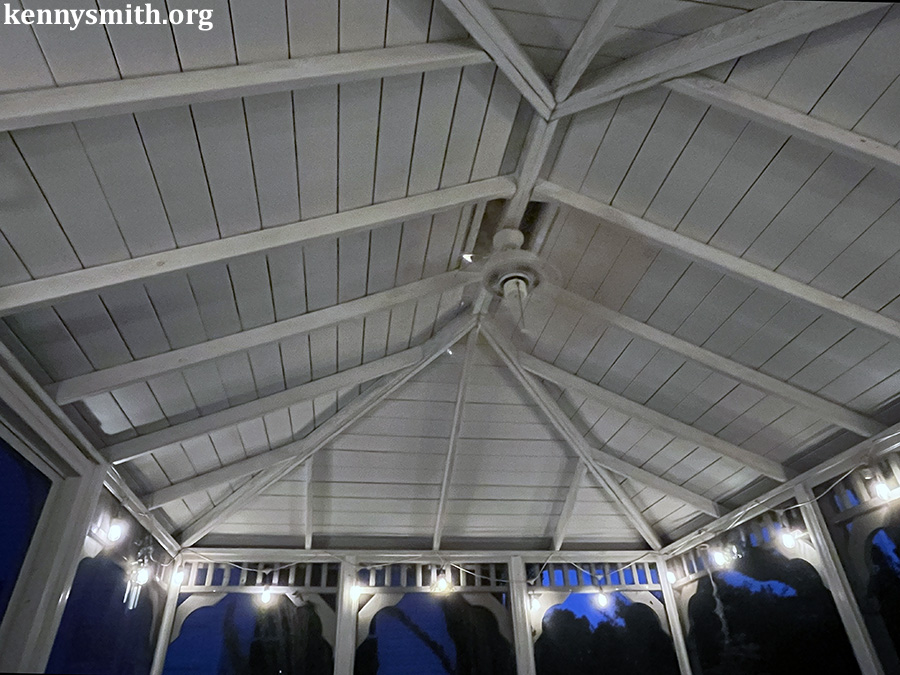
Also this weekend, we spent a little time in the gazebo.
We need to spend more time out there. It is a nice setup. I always seem to rediscover the idea late in the season.
The work I did Sunday, when the weather was bad, freed up some time today, and this was the best idea I had all weekend. It was a beautiful day, and I haven’t been on my bike in a while, and aside from the 15 mph headwinds, it was a perfect day to make my feet turn in little circles.
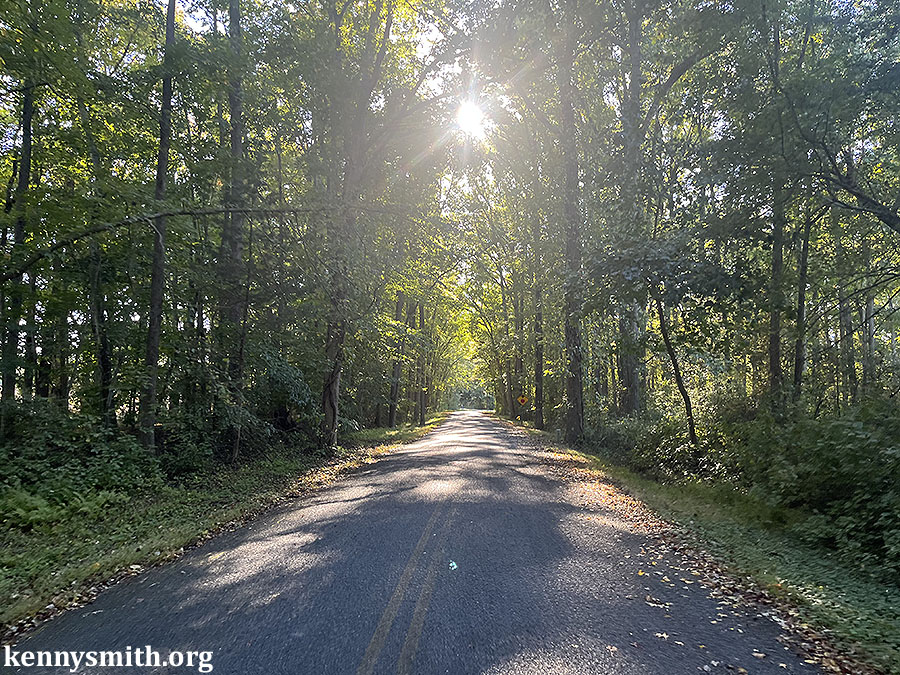
Here are a few of the things I saw on my 65 kilometer ride.
There aren’t enough tree-covered roads like this around here. Then again, if all of the roads here looked like this, if that would feel like enough.
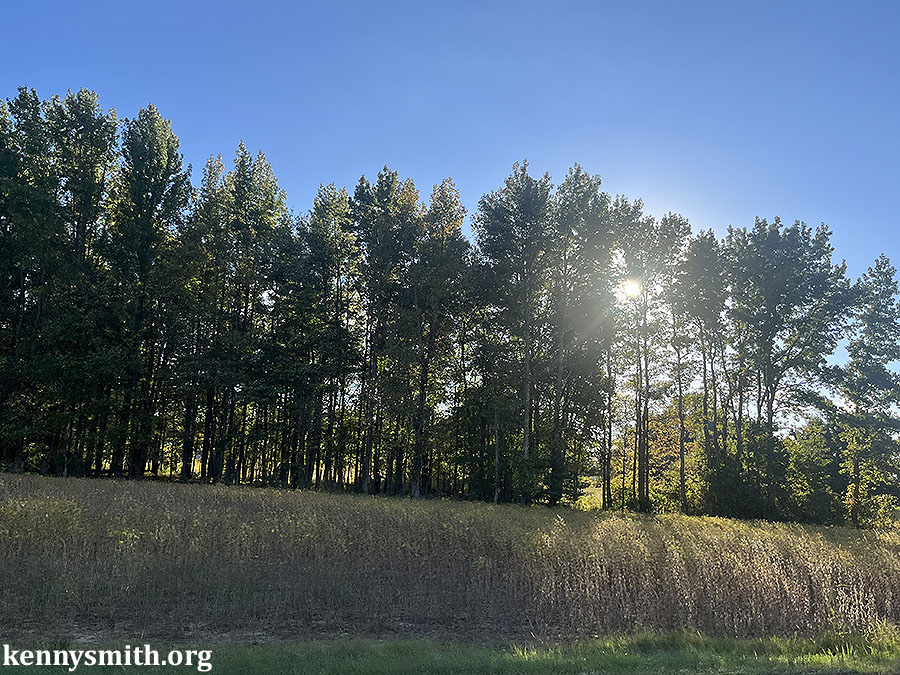
Having gone through town twice, and then another little crossroads town, and back out into the pastureland, I found this view about 30 kilometers into the ride.
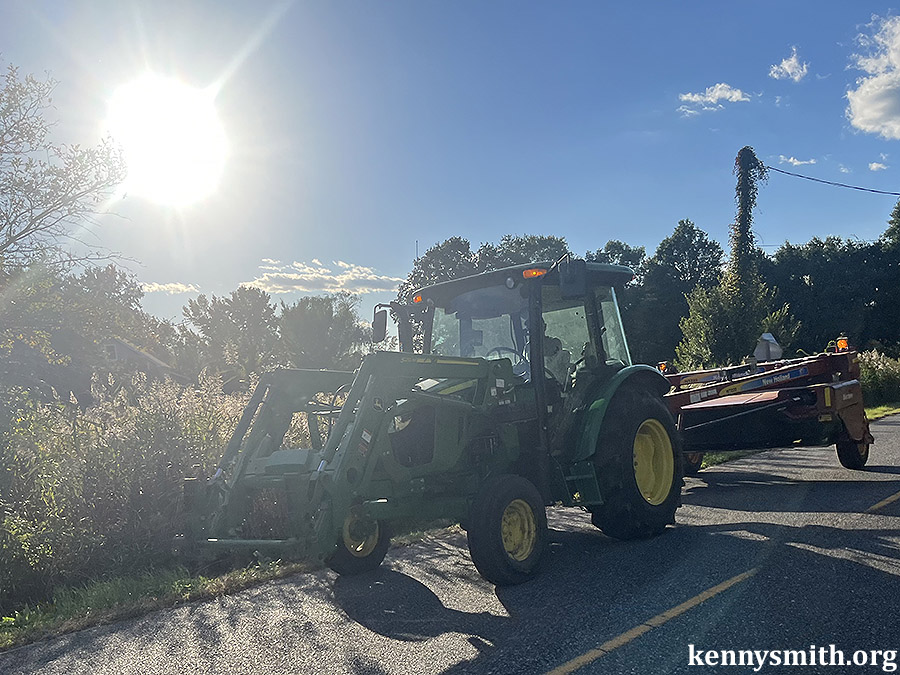
Then I saw this tractor, pulling a mower, very soon after.
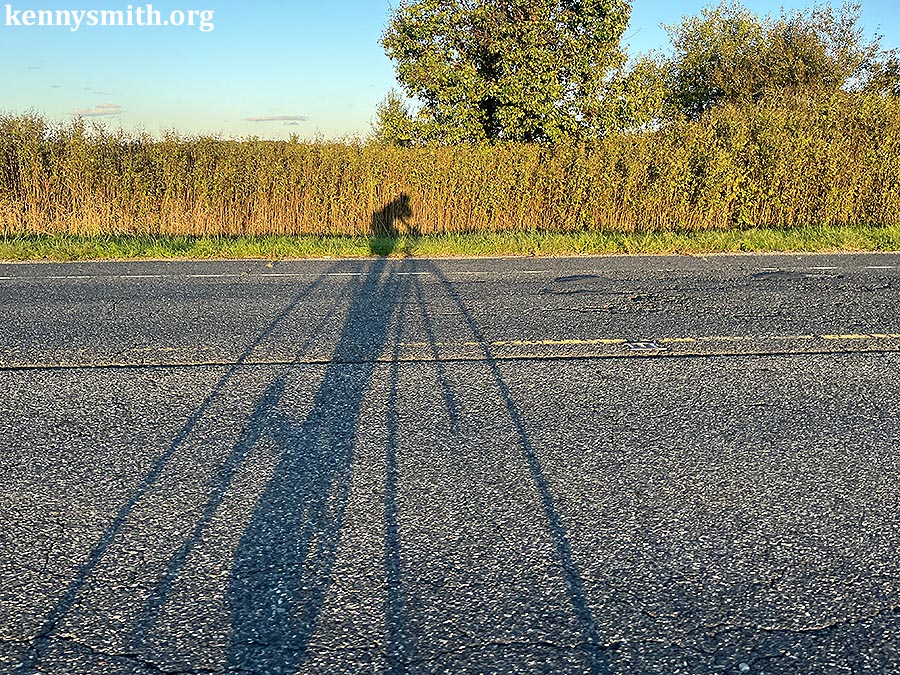
At about 53K into the ride, I finally had the chance to take a shadow selfie.
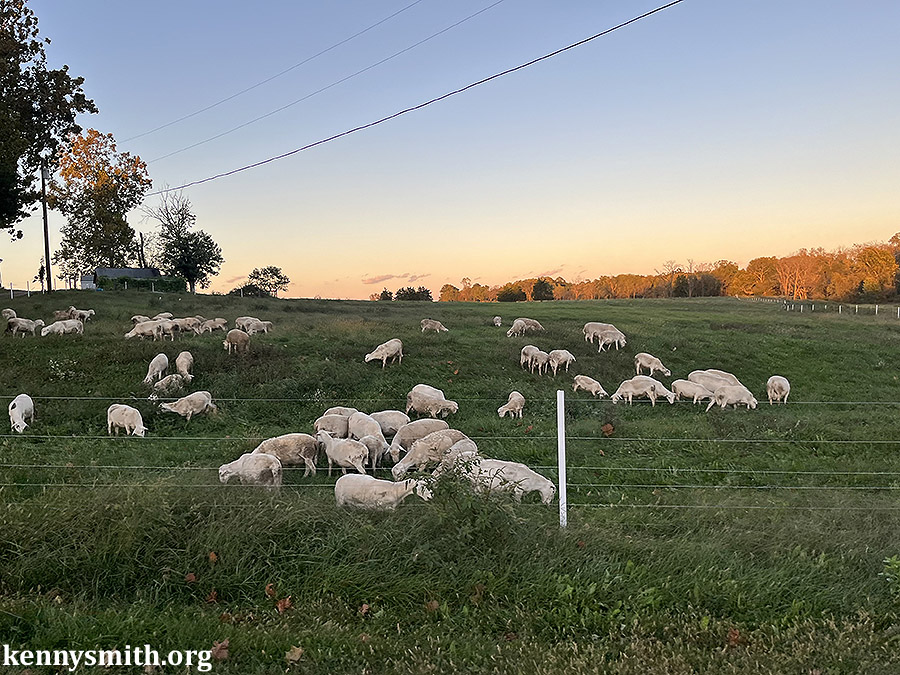
After that, it was back into town a third time, just to add on the distance. I passed one of the sheep herds attended to their evening graze.
Not pictured today were the three deer, four dogs, five chickens or six cars that seemed intent on killing me.
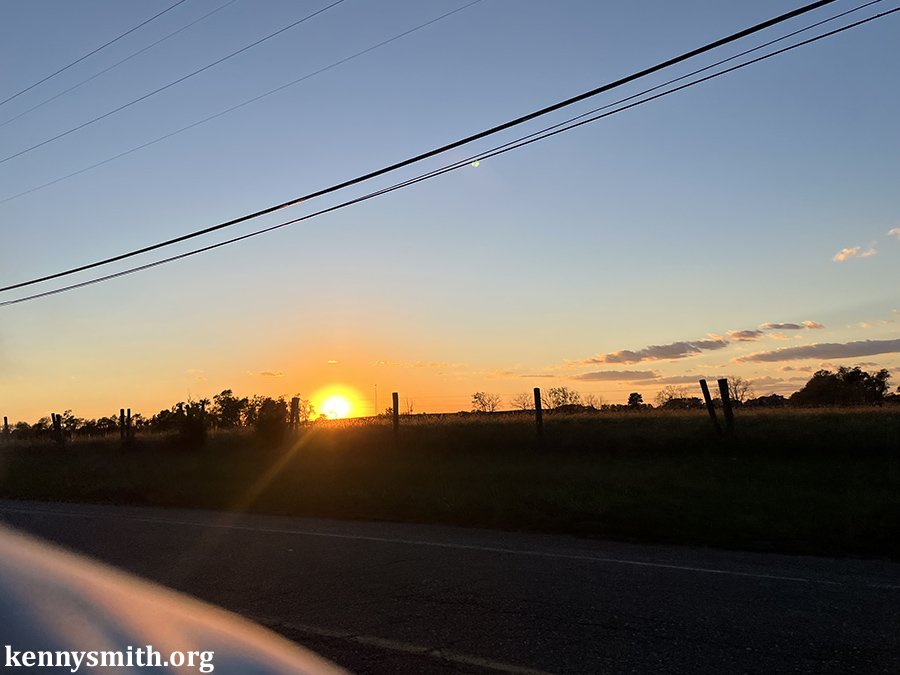
But you do get the sunset over my shoulder. This is just two miles from home, and about 60 seconds before everything on me made the case for wrapping up the ride.
So I did, having timed the ride perfectly. A glorious day, a slow, windy ride, 65 kilometers ending just before the sun disappeared. Got cleaned up, took a 20 minute power nap, had dinner, and put on the compression boots.
Now, I’m about to grade tonight’s homework, and pull together a few more things for tomorrow.
This was a great Monday. I hope yours was, as well.